VIP Live Dealer Tables: What Higher Limits Really Mean
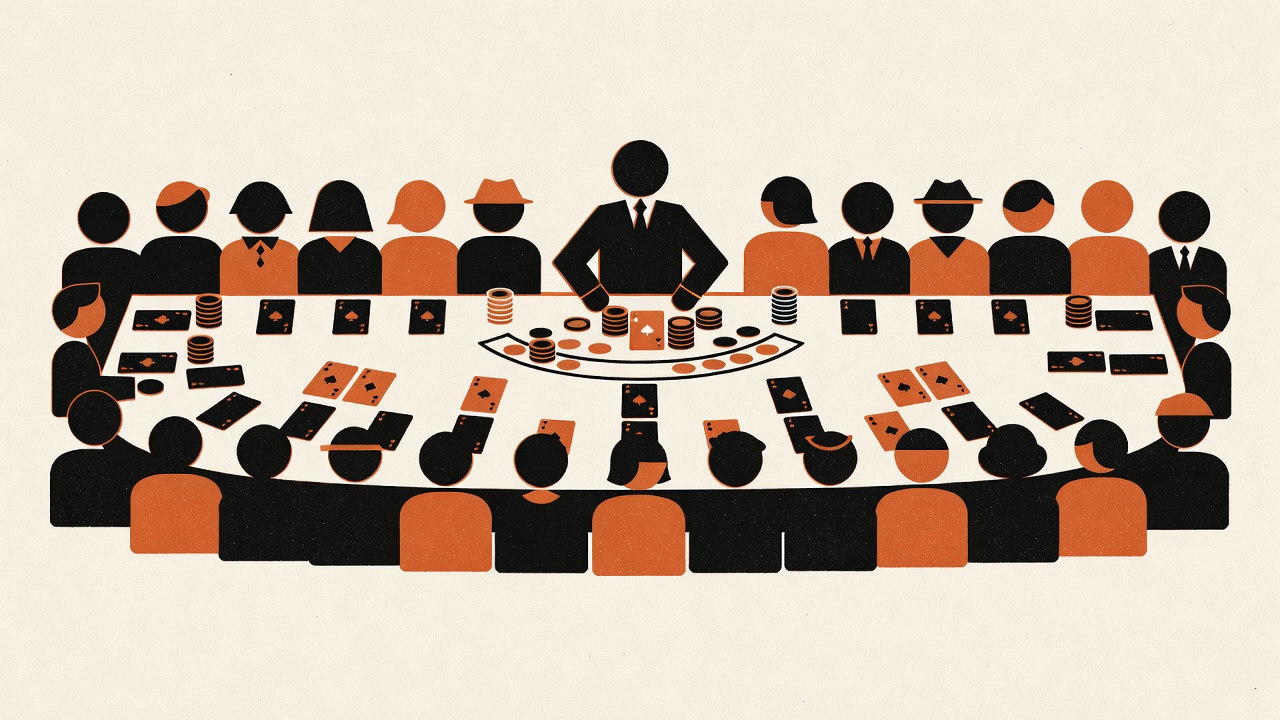
A VIP live dealer table allows bets from 500 to 100,000 dollars per hand. The same game rules apply as low-limit tables. But the psychology of high-limit play is fundamentally different.

The Setup and the Mental Model
A recreational player sits at a 5-dollar minimum table. A whale sits at a 500-dollar minimum table. The dealer, the cards, and the house edge are identical. Blackjack pays 3:2. Baccarat has the same probabilities. Yet the high-limit player experiences the game differently.
Richard Thaler and other behavioral economists call this "loss aversion." A person experiences the pain of losing 100 dollars more intensely than the pleasure of winning 100 dollars. But this asymmetry disappears at certain wealth levels. For a billionaire, 100 dollars is noise. For a middle-class player, it is real money.
VIP tables exploit this. The casino sets higher limits, attracting wealthy players. These players are often business executives or athletes who earn large incomes. They treat losses of ten thousand dollars the way a casual player treats losses of one hundred dollars: as entertainment cost, not financial hardship.
Why Casinos Run VIP Programs
A whale playing fifty hands of 500-dollar blackjack generates 25,000 dollars in volume. At a 1% house edge (reasonable for blackjack), the casino expects to win 250 dollars per session. But the whale might play five times a week. That is 1,250 dollars per week, 65,000 dollars per year from a single player.
The casino invests heavily to keep this player. Free suites. Complimentary meals. Private dealers. A dedicated host. These costs might be 50,000 dollars per year. But if the player generates 65,000 dollars in edge, the casino nets 15,000 dollars after investment. This math works because the player's volume is so high.
For comparison, a casual player putting 1,000 dollars through the system per month generates only 10 to 30 dollars per month in expected edge (depending on the game). The casino's investment in this player is marketing and standard service. The return is lower but the cost is also lower.
The Psychological Lever
High stakes trigger different decision-making. In Prospect Theory, Kahneman and Tversky describe how people shift from loss-averse to risk-seeking when facing potential large losses. A player down 10,000 dollars at a VIP table might double down, chasing a quick recovery. This is called "chasing losses" and it is more common at high-limit tables.
The casino knows this. The dealers are trained to move the game quickly and smoothly. The environment is designed to be pleasant and minimize friction. The goal is to keep the player in a state of continued, engaged play. Long sessions at high stakes generate more volatility and more total loss (in absolute terms).
The Comparison Effect
Whales often play with peers. A group of wealthy friends might rent a VIP baccarat table for an evening. Each brings a bankroll of 500,000 dollars. One player wins 200,000. Another loses 150,000. The winner feels like a genius. The loser feels like he had a normal night (he is down 150k but that is not a disaster for him).
The comparison effect: Players compare their outcome to the table, not to their personal financial baseline. If the table average loss is 100,000 dollars, a player down 50,000 is winning relative to the table. This mental accounting is powerful. It keeps players coming back because they feel they are beating the table, even though they are losing to the house.
The Lifestyle Integration
VIP play becomes integrated into the player's identity. A CEO or athlete develops a reputation as a high-roller. This reputation is valuable in certain circles. The casino encourages this. They take photos, mention the player by name, treat him like celebrity. The player becomes status-conscious about his VIP level.
The casino has loyalty tiers: Platinum, Diamond, Black Card. Each tier has better perks. A player climbs the tiers by playing more volume. This is a classic gamification loop. The player chases tier status the way a video game player chases ranks. The actual game outcome (winning or losing) becomes secondary to the status achievement.
The Limits and the Reality
A VIP table with 500-dollar minimum and 100,000-dollar maximum looks intimidating. But the math is unchanged. Baccarat is 50.68% player, 49.68% banker, 4.11% house commission (depending on exact rules). The player cannot beat these odds with higher stakes. The stakes just make the losses larger.
Where VIP players sometimes find edge is in non-standard offerings. Some casinos offer VIP players slightly better rules: 3:2 blackjack instead of 6:5, slightly lower commission on baccarat, early surrender options. These modifications do not flip the math in the player's favor. But they do lower the house edge from 1.5% to 0.9%, which is meaningful over a year of high-volume play.
The Endgame
Most VIP relationships end the same way. The player either stops coming (loses patience, gets too wealthy, or experiences a bad year), or the casino stops extending credit (the player's luck turns really bad and the debt becomes uncollectable), or the player's circumstances change (divorce, business failure, legal trouble).
The few players who do achieve long-term profitability at high limits are usually advantage players (card counters, professionals who play only positive-expectation games). Regular wealthy players eventually deposit all the money they are willing to lose at the tables. The casino always wins over time.
Rooms for this read
Share this read