Let It Ride Poker: Rules, Bets, and Strategy Tips
Let It Ride was invented in the 1980s. It sold itself as a game where you control your losses. The math shows otherwise.
Let It Ride was invented in the mid-1980s and immediately sold itself as a game where you control your losses through strategic decision-making. The marketing worked. Players thought they had an edge. The math shows otherwise.
How Let It Ride Works
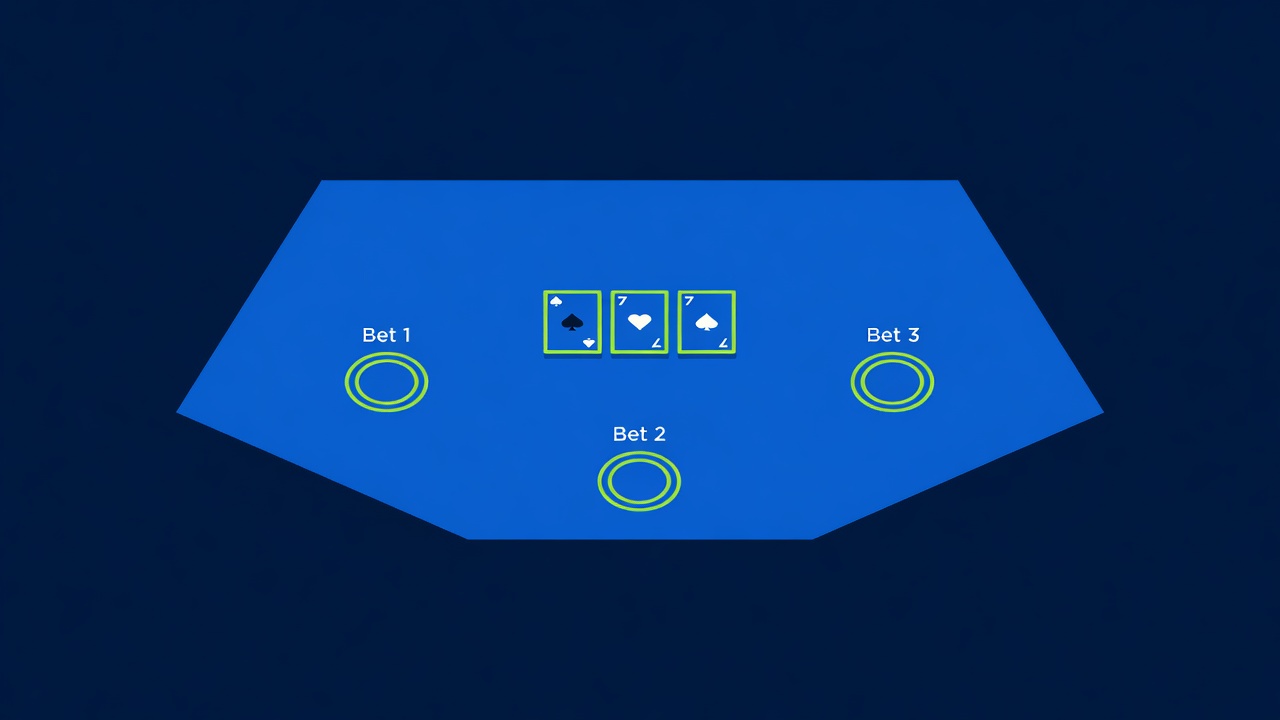
You receive three cards. You decide whether to "let it ride" (keep your bet for the rest of the hand) or "pull it down" (remove your bet).
You see a community card. You make a second decision about whether to let your side bet ride.
You see another community card. The hand is final. Your hand is compared against a pay table. You win or lose based on your poker hand strength.
The idea: you get to see partial information (your three cards and one community card before final commitment) and make two separate decisions about whether to commit your money.
The House Edge
Let It Ride has a house edge of 3.5% to 4% when played with optimal strategy. This is significantly worse than blackjack (0.5%) and roughly similar to craps and baccarat.
Why so high? Because the payouts are carefully designed so that the casino keeps a large percentage.
A royal flush pays 1000 to 1. Sounds impressive. But a royal flush occurs once every 650,000 hands. Over thousands of hands, these rare large payouts get dwarfed by the house's cut on frequent smaller payouts.
A pair of tens or better occurs once every 2.5 hands. The payout is even money. Over time, the frequent small losses from low-value hands overwhelm the rare big wins.
The Control Illusion
Let It Ride creates the illusion that you are controlling your losses by allowing you to pull your bets if you do not like the strength of your hand.
But you cannot control expected losses through bet removal because the odds do not favor you. Removing a side bet simply reduces your losses that hand. It does not make the game profitable.
The house edge erodes your bankroll no matter which bets you strategically remove. Over thousands of hands, the 3.5% to 4% edge is inexorable.
Why Casinos Love It
Casinos love Let It Ride because it feels like poker (which players understand as skill-based) but has the house edge of a slot machine (guaranteed casino profit). Players feel like they are using skill and making smart decisions when really they are just delaying the inevitable outcome.
The Limits of Strategy
Strategy guides for table games create the illusion that superior decision-making yields superior outcomes. This is partially true but easily overstated. A strategy that improves your position by 0.5% against a 2.2% house edge still leaves you in negative expectation territory.
The value of strategy is in risk reduction, not in changing the fundamental mathematics. Strategy cannot overcome a negative expected value game. It can only minimize the rate at which you lose.
This is the critical distinction that strategy advocates often blur. They say: 'Follow this strategy and improve your odds.' What they mean is: 'Follow this strategy and lose slightly less slowly.' These are not the same thing.
Emotional Decision-Making
Under pressure, most players deviate from optimal strategy. They get hot hands and bet more. They get cold hands and chase losses. They tilt. The difference between theoretical optimal play and actual average play is substantial - often 1% to 2% of expected value.
This is where the real skill lies: not in knowing the perfect play, but in consistently executing the disciplined play regardless of recent outcomes. This is behavioral, not mathematical.
Rooms for this read
- The Baccarat room
- The Blackjack room
- The Craps room
- The Poker room
- The Strategy room
- The Tips & Tricks room
Share this read