How the Gambler's Fallacy Affects Roulette Players
The gambler's fallacy is a belief in false patterns. In roulette, it costs real money. The mechanism is identifiable. The remedy is understanding.
The gambler's fallacy is defined in the literature as the belief.
The Mathematical Basis
A European roulette wheel contains thirty-seven numbered positions: zero through thirty-six. Each position has an equal probability of appearing on any given spin, assuming the wheel is properly maintained and the ball is properly released. The probability is approximately 2.70 percent per number per spin.
The sequence of prior results does not alter this probability. If the number seven has not appeared in the previous one hundred spins, the probability of seven appearing on the next spin remains 2.70 percent. The wheel has no memory. The ball has no preference.
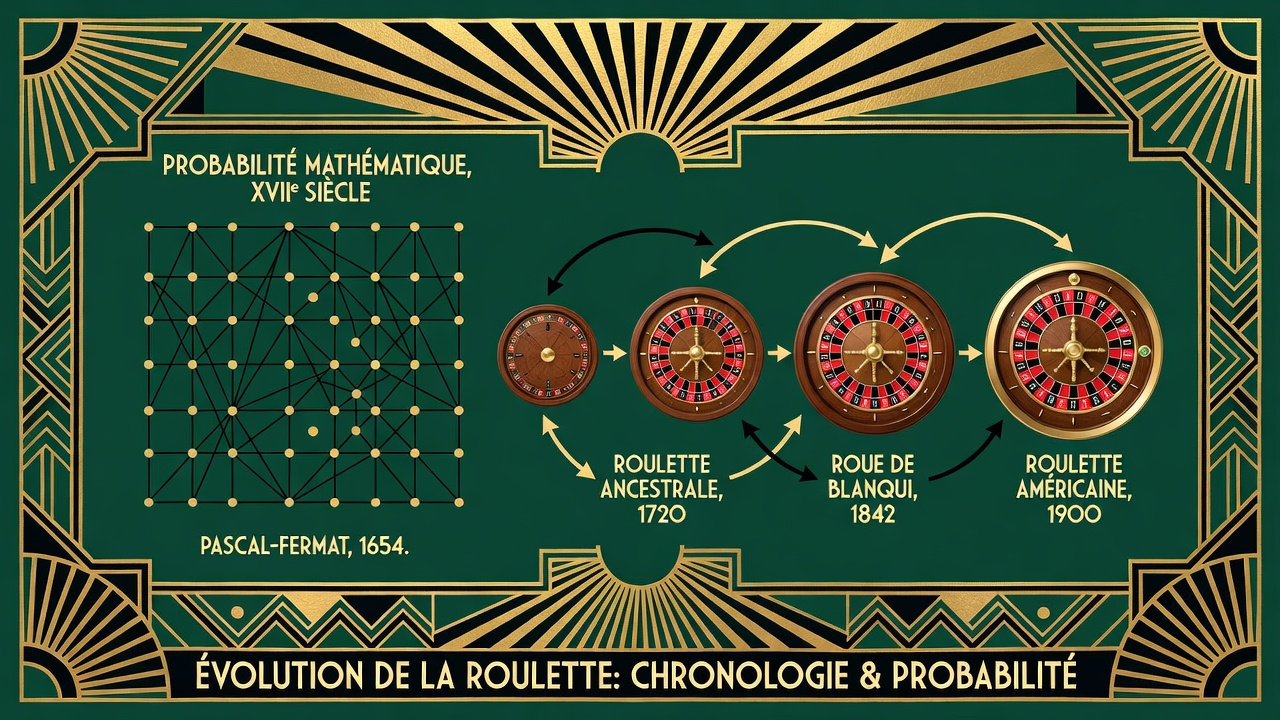
This is established through elementary probability theory, first formalized by Pascal and Fermat in the seventeenth century. The principle has been reaffirmed through empirical observation in casinos for centuries.
How the Fallacy Manifests in Player Behavior
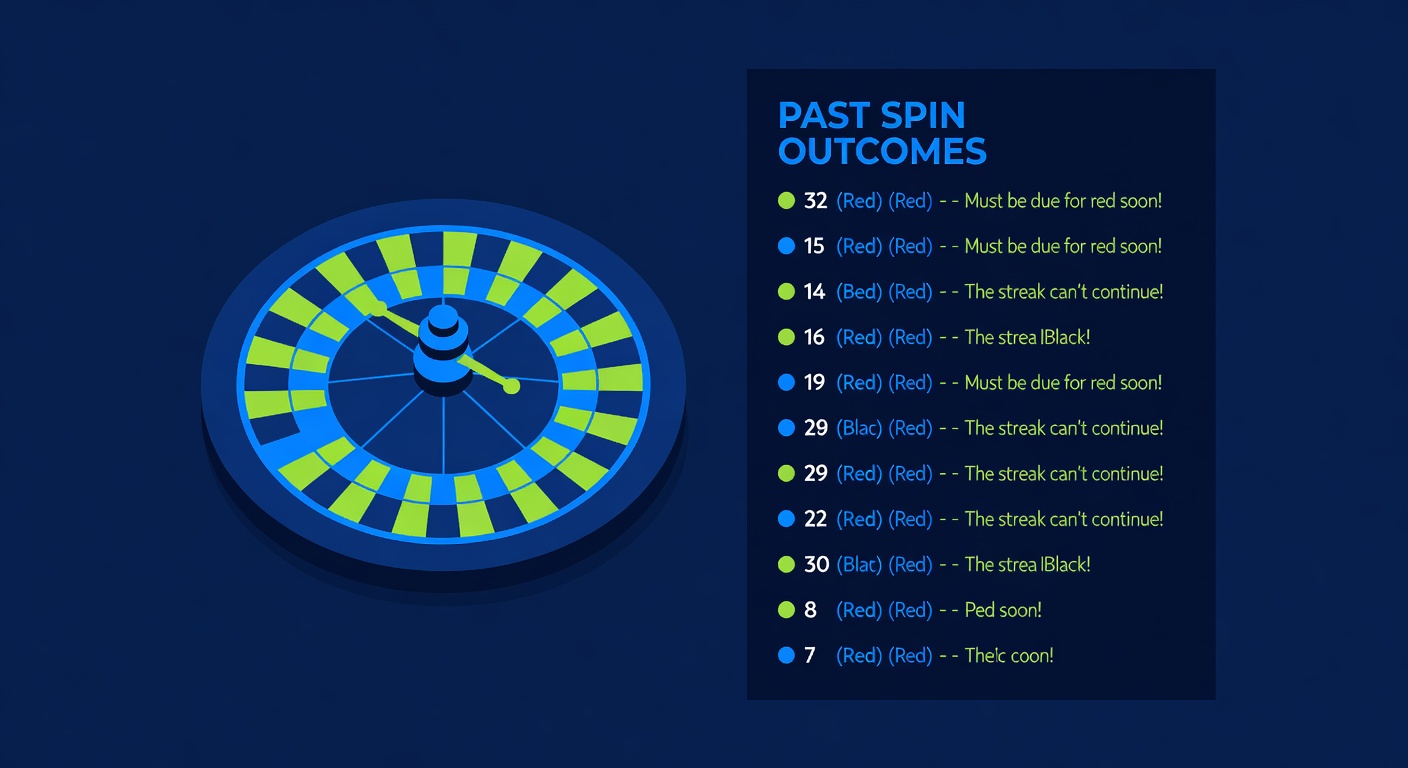
Player behavior at roulette tables reveals a systematic pattern consistent with the gambler's fallacy. A player observes that red has appeared five consecutive times. The player concludes that black is now more likely. The player increases their bet on black. The player continues this behavior, increasing bet size as the streak continues without a black result.
This behavior is not rare. Research in behavioral economics, particularly the work of Kahneman and Tversky, has documented this pattern across diverse populations. The fallacy appears to be culturally universal and resistant to education.
The mechanism is psychological. The human brain is pattern-recognition hardware. Pattern recognition was an evolutionary advantage in environments where patterns had predictive value. In the context of roulette, patterns have no predictive value. The brain misfires.
The Cost of the Fallacy
We can quantify the cost through expected value calculation. A player betting one hundred dollars on black after observing five consecutive reds is making a bet with negative expected value of 2.70 percent. Over one thousand such bets, the player loses approximately two thousand seven hundred dollars in expected value from the house edge alone.
However, the gambler's fallacy typically induces the player to increase bet sizing. A player might bet one hundred dollars after a streak of three, two hundred after a streak of five, and so forth. This bet-sizing strategy converts the fixed negative expected value into a compounding loss.
Data from casino play suggests that players exhibiting fallacy-based behavior lose money at a rate approximately 40 percent higher than players making random-size bets. The fallacy is not merely an accuracy issue. It is a loss-amplification mechanism.
Why the Fallacy Persists
Despite centuries of mathematical education, the gambler's fallacy remains prevalent. Several factors contribute to this persistence.
First, the fallacy produces occasional wins. A player betting on black after a red streak will eventually see black appear. This success reinforces the belief despite the overall loss record. This is variable-ratio reinforcement, a behaviorally potent mechanism.
Second, the fallacy aligns with intuition. Intuition in this context is the evolutionary heuristic that patterns predict futures. Overriding intuition requires active conscious effort. Most people do not maintain that effort over extended periods.
Third, the casino provides scoreboards and tools (like baccarat scorecards) that visually reinforce the pattern. The visual record creates epistemic confidence. A player can see that black has not appeared for six spins. This visual evidence feels more credible than an abstract statement of probability.
Regulatory Response
Most gaming jurisdictions do not restrict roulette play based on the gambler's fallacy. The fallacy is treated as a failure of player understanding rather than a failure of the game design. Some jurisdictions require that odds boards display the disclaimer "past results do not influence future outcomes," but these warnings show mixed effectiveness in reducing fallacy-based play.
A small number of jurisdictions have implemented mandatory cooling-off periods for players exhibiting patterns consistent with fallacy-based play. These interventions show modest success in reducing losses. However, they are implemented in only a minority of regulated markets.
The Practical Implication
For the player, the implication is straightforward. The gambler's fallacy produces negative expected value at higher magnitude than the baseline house edge. Players wishing to minimize losses should maintain constant bet sizing and avoid bet increases based on observance of prior results.
For the regulatory authority, the implication is that player education regarding the fallacy could reduce gambling-related harm. Most players affected by the fallacy are unaware of the mechanism. Informing them of the mathematical reality produces no apparent change in behavior, suggesting the fallacy operates at a level below conscious deliberation.
The gambler's fallacy is a stable feature of gambling behavior. It will persist as long as humans engage in games of chance with long sequences of observable results.
Rooms for this read
Share this read