The History of Roulette: Pascal's Accidental Invention
Blaise Pascal invented the roulette wheel in the 1650s while trying to solve a probability problem. The wheel was not designed for gambling. It became a casino game by accident.
The gentleman from Marseille arrived at the table at four in the morning. He had been gambling for sixteen hours. He did not speak. He placed his bet. The wheel spun. His face remained unchanged throughout. This is the scene that plays at every roulette table: a wheel spinning, a person waiting, chance resolving itself in seconds.
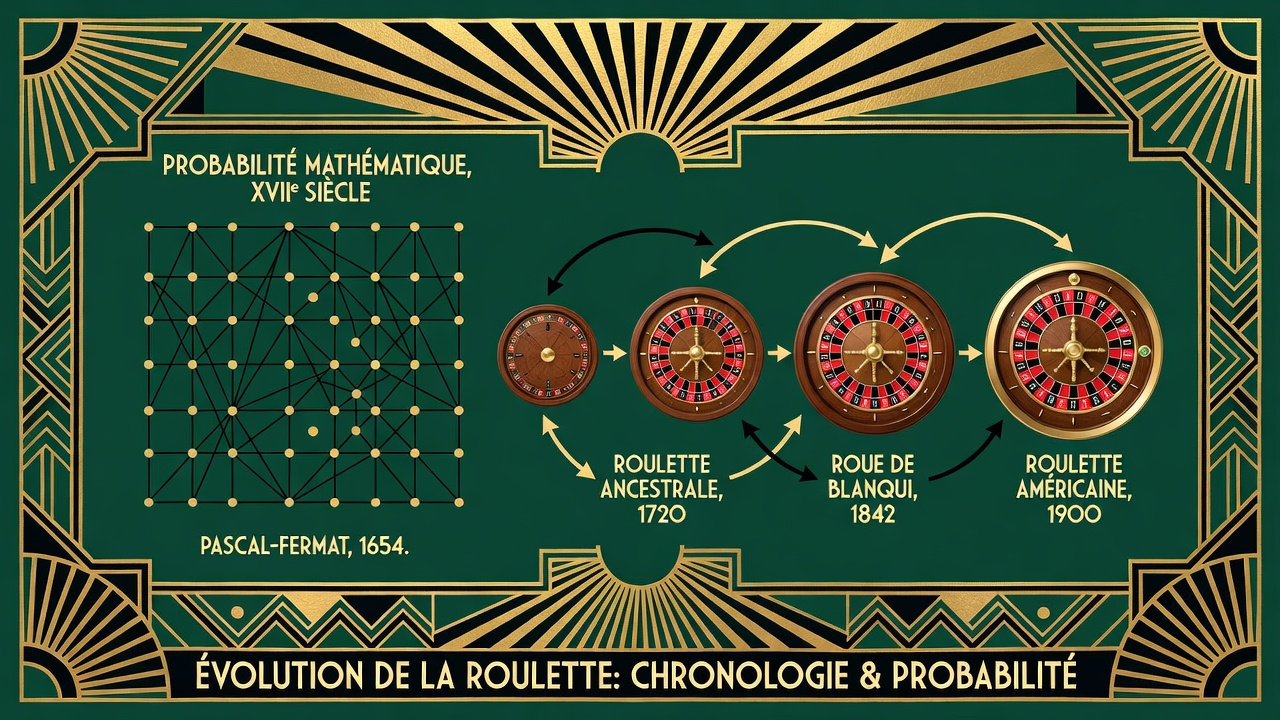
The wheel itself has a history that predates its use as an instrument of chance. Blaise Pascal built it in 1655 to explore probability. Pascal was a mathematician, not a gambler. The wheel was an intellectual instrument.
The Mathematical Question
Pascal was interested in probability. The problem was how to divide stakes in a game interrupted mid-play. If two players are wagering and the game must end, who deserves the remaining pot? The answer depends on the probability of each player winning from that point forward.
Pascal wanted a physical device that could represent probability visually. He designed a wheel divided into numbered sections. Each section had equal area. A ball dropped onto the wheel would land in each section with equal probability. This was a mechanical way to represent randomness.
Pascal never gambled with his wheel. It was a teaching tool. But the device was elegant. It worked. And someone, somewhere, realized it could also settle bets.
The Journey to Casinos
The earliest use of roulette wheels for gambling appears in 1690s France. French aristocrats were gambling with wheels based on Pascal's design. The game spread to England and eventually to Casino de Monte Carlo in the 1860s.
The European version (single-zero roulette) was standardized around 1870. The wheel had 37 slots: numbers 1 through 36, plus a 0. The American version added a double-zero in 1875, making 38 slots. This increased the house edge and made American roulette significantly worse for players.
by 1900, roulette was a casino standard across Europe, North America, and wherever European gambling culture spread. The game had become iconic. The device that Pascal invented for probability education had become the most recognizable gambling game.
The Mechanical Constraints
For roulette to work, the wheel must be balanced. If one section is slightly heavier, the ball lands there more often. Casinos employ mechanics to keep wheels perfectly balanced. A wheel out of balance is a legal liability. It is also an opportunity for cheating.
Historical records document roulette scandals where the wheel was deliberately tilted. A biased wheel can be exploited. A player who identifies the bias can bet accordingly and gain an edge. Modern wheels are audited regularly for bias.
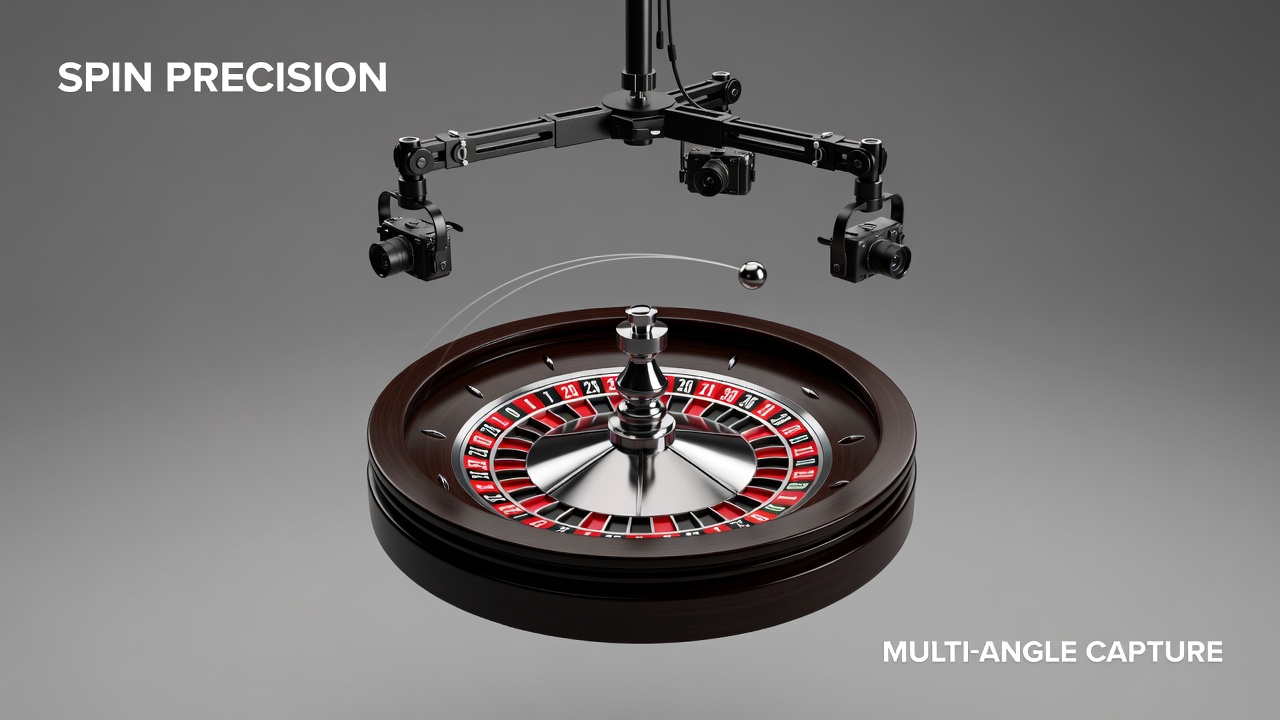
The ball itself is subject to physics. Its speed, the spin of the wheel, the friction, all affect the outcome. Prediction is theoretically possible but practically impossible in a real casino. The variables are too many.
The House Edge
On a European wheel with 37 slots, a single-number bet pays 35 to 1. The true odds are 36 to 1. The player is getting undercut. Over infinite plays, the player loses 2.7% of wagered money (the house edge).
On an American wheel with 38 slots, a single-number bet pays 35 to 1. The true odds are 37 to 1. The house edge jumps to 5.26%. This difference is why wise players choose European wheels when available.
The house edge is built into the game mathematically. No strategy changes it. No pattern predicts where the ball lands. Roulette is pure chance. This is both its appeal and its danger.
The Allure
Roulette is the most watched game in casinos. The wheel spinning, the ball bouncing, the moment of resolution. It is theatrical. Every hand is independent. A player can get lucky. This possibility is what brings people to the wheel.
A mathematician sees the expected loss. A gambler sees the possibility of a lucky spin. The wheel has no memory. The next spin is independent of the last. But humans cannot help imposing pattern. They see the ball land on black five times and assume red is due. They see a number miss and assume it is "cold."
Pascal would have recognized this. His wheel was designed to demonstrate probability. Instead, it became an instrument for the human mind to chase patterns that do not exist.
The Accidental Legacy
Pascal did not intend roulette as gambling. He invented a mathematical tool. The tool was repurposed. Over three centuries, it became perhaps the most iconic symbol of gambling in Western culture. The elegant wheel that represented Pascal's probability theory became the device where people lose money to the very randomness Pascal studied.
It is fitting. Invention often escapes the inventor's intent. The wheel endures.
Rooms for this read
Share this read