

Double Ball Roulette Explained: Payouts, Odds, and Strategy
Double Ball Roulette uses two balls instead of one. This changes the odds on certain bets but not others.
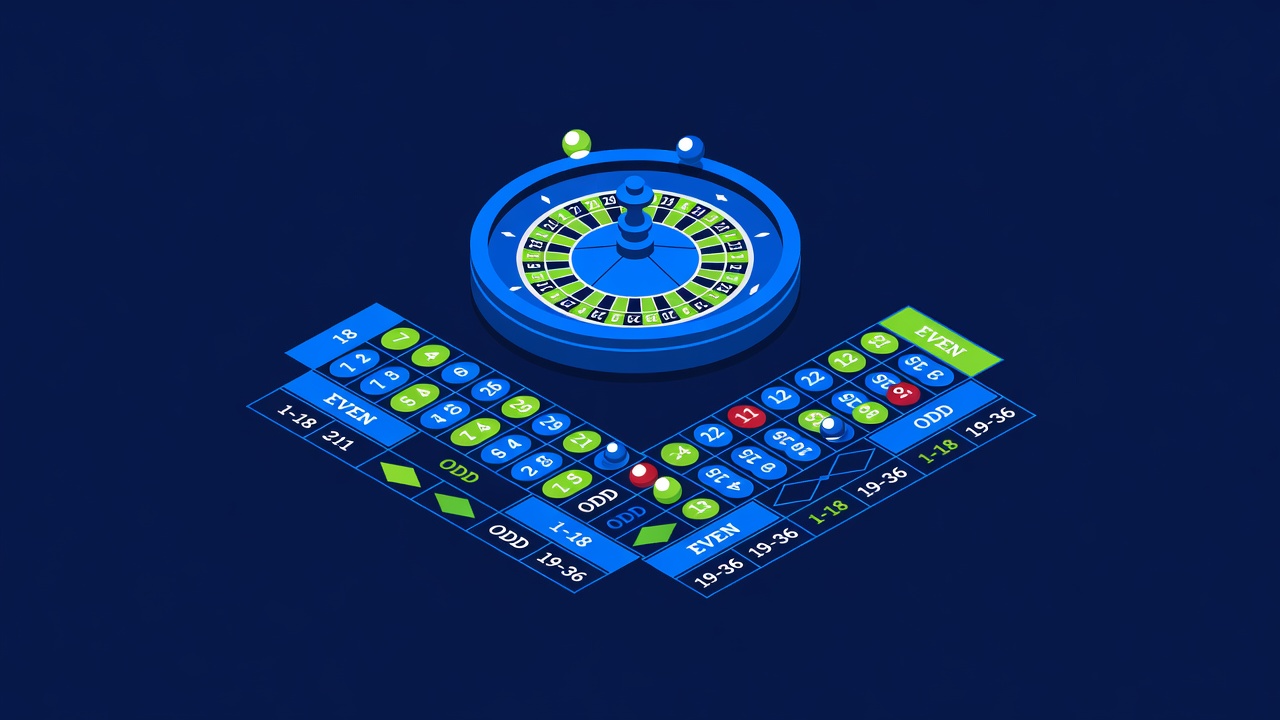
Double Ball Roulette uses two balls instead of one. This changes some odds but not others.
The Setup
The wheel has 37 numbers (European roulette). Two balls are spun. Both land on numbers.
If both balls land on the same number, that is a special outcome. Single-number bets pay differently.
The Math
A normal single-number roulette bet on 17 has odds of 1 in 37 (37 to 1 payout).
In Double Ball Roulette, two balls mean more outcomes. The chances of both landing on 17 are 1 in 1369 (37 times 37).
But the game is designed so hitting your number with both balls pays significantly more (like 1200 to 1).
The House Edge
The house edge on Double Ball Roulette is approximately 2.7%, same as regular roulette.
The game looks different but the odds are mathematically equivalent when you account for all payouts.
Why Play It
Some players like the novelty. Two balls create more action. The variance is different. Sometimes both balls create interesting outcomes that feel more exciting than single-ball roulette.
But the house edge is the same. You are not getting a better deal.
The RTP-Perception Gap
Most players do not know the RTP of the games they play. They think slots are 'lucky' or 'hot' based on recent outcomes. This perception is disconnected from the underlying RTP.
A game with 94% RTP will feel different on Tuesday than on Monday even though the RTP is constant. This is variance. But players attribute it to the game being 'tighter' or 'looser,' when really they are just observing natural volatility.
Casinos benefit from this confusion. If a player plays a 94% RTP slot for 1,000 spins and happens to run hot (variance swing in their favor), they feel like they have 'found' a good game. They return. The next 1,000 spins run cold (normal variance), and they feel betrayed.
The RTP never changed. Only the order of random outcomes did. Understanding this gap between RTP and short-term experience is crucial for rational play.
Session Planning
Knowing the RTP allows you to plan realistic session outcomes. A 96% RTP game at $2 average bet expects to cost you about $8 per 500 spins, or $0.016 per spin. If you want a two-hour session, you might play 1,500 spins. Expected cost: $24. This is not a prediction. It is a statistical expectation. Some sessions will lose more, some less, some will win. But the long-term average is the RTP.
The Execution Problem
Knowing the right decision and executing it consistently are different skills. Under pressure, with real money at stake, most people deviate from rational strategy. They chase losses. They double down after wins. They play tighter hands after losing sessions.
This execution gap is where professionals differ from amateurs. Professionals have trained themselves to execute strategy regardless of emotional state. Amateurs have not. This training is difficult and takes time.
Information Asymmetry
You have incomplete information at the time of decision. You know your hand. You do not know your opponent's cards or the community outcomes. Strategy accounts for this uncertainty through probabilities and expected values. But it feels like guessing.
Good strategy is mathematically sound guessing. But the psychological feeling of uncertainty remains. This is why people deviate: the strategy feels wrong because they have incomplete information.
Rooms for this read
Share this read





