

How to Read a Slot Info Screen Before You Spin
Every slot machine has an info screen. It shows RTP, volatility, rules, paytable. Most players never look at it.
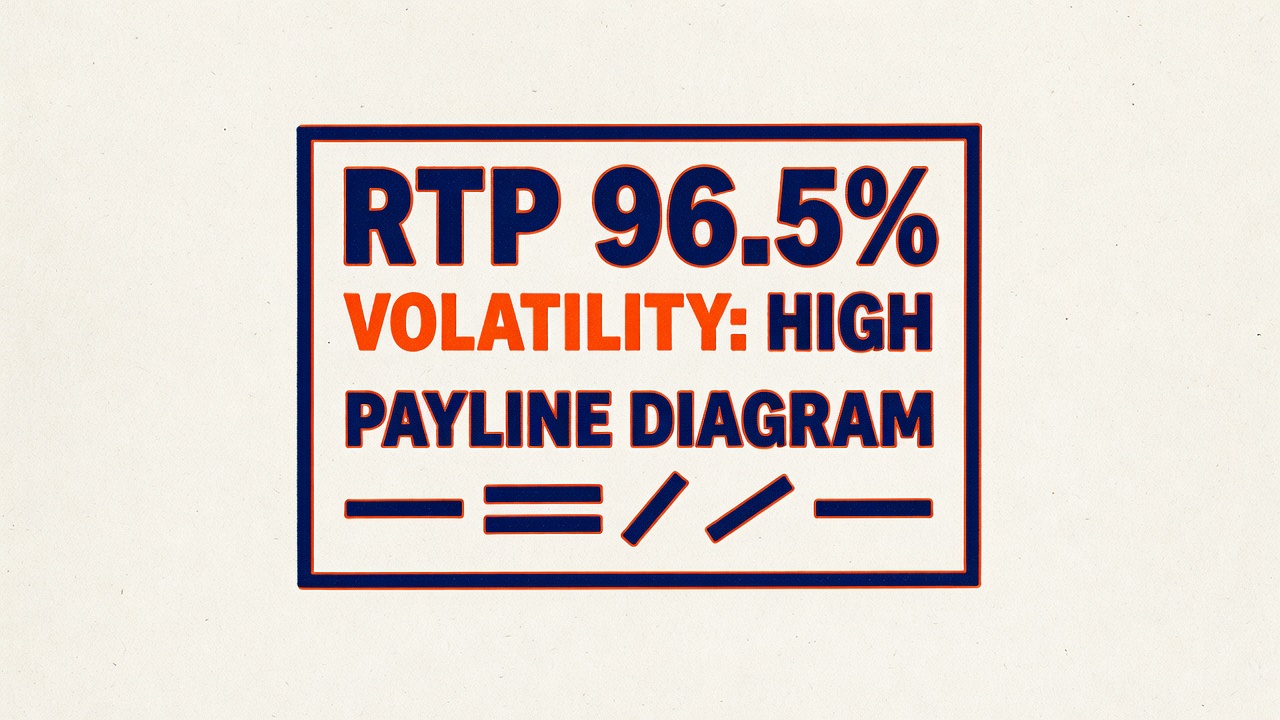
Every slot machine has an info screen. It shows RTP, volatility, rules, paytable. Most players never look at it. This is a mistake.
What the Info Screen Shows
RTP: Return to Player. This is the percentage of money the game returns to players over time. 96.5% RTP means the game keeps 3.5% as the house edge.
Volatility: How much the game swings. High volatility means big wins are rare but big. Low volatility means small wins are frequent.
Paytable: The payouts for each winning combination. A royal flush pays 1000 to 1. A pair pays 1 to 1.
Rules: How the game works. When do free spins trigger. What symbols are wild.
Why It Matters
Before you spin, you should know:
- What is the house edge (100 minus RTP)
- How volatile is the game
- What is the minimum and maximum win
A 94% RTP slot means you lose $6 per $100 wagered. A 98% RTP slot means you lose $2 per $100 wagered.
Over time, this compounds.
How to Use It
Open the info screen. Read the RTP. If it is below 96%, consider a different game.
Check the volatility. If you have a small bankroll, play low volatility. If you have a big bankroll and want big swings, play high volatility.
Look at the paytable. Some games have lots of small wins. Others have rare big wins.
This takes 30 seconds. Most players skip it and lose more money than they would if they chose better games.
Broader Implications
Understanding the mechanics of these games and systems is the foundation of rational decision-making. Most players gamble without this understanding. They rely on intuition, tradition, or superstition. This is efficient for the casinos.
For players seeking to minimize harm or maximize information, understanding the structure is essential. The structure is not random. It is designed. Understanding the design allows you to make conscious choices about participation rather than drifting into patterns based on feel.
Moving Forward
Whether you choose to participate in these games is a personal decision. But that decision should be based on full information about expected costs, volatility, and how these systems work. This content provides that foundation.
Core Principles
Regardless of the specific game or strategy, some principles are universal. First, understand the mathematics. Know the edge, the variance, the expected value. Second, plan your bankroll accordingly. Have enough capital to weather downswings. Third, execute your plan without deviation. Discipline beats intuition over long samples.
Personal Responsibility
No one compels you to gamble. The choice is yours. But if you choose, make it an informed choice. Understand what you are doing. Understand the odds. Understand the costs. Understand your limits. Many people cannot do this. For them, the best choice is not to participate.
The Cascading Effect
One myth persists: that you can 'read' a machine based on recent play. A machine that has paid out a lot is 'loose.' A machine that has not paid is 'tight.'
This is not how machines work. Every spin is independent. The machine has no memory of what it did yesterday or an hour ago. A machine that hit the jackpot yesterday is not more or less likely to hit it today. The odds are identical.
Why does this myth persist? Because humans are pattern-matching machines. We see a sequence (lose, lose, lose, win big) and assume causation. We think the losses created pressure that led to the big win. Actually, we just observed variance.
The Operator's Perspective
Casino operators do not reprogram machines based on recent performance. They program them once and leave them. The RTP is set at the factory. The operator might rotate machines to different locations or retire old ones. But individual machine tuning is rare and heavily regulated.
This is important because it means you cannot find 'hot' machines. You cannot discover patterns. You cannot beat the system through observation. The system has no patterns to observe.
Rooms for this read
Share this read





