Touch ID and Face ID Login for Casino Apps
Most major casino apps now support biometric authentication. The technology eliminates password friction, but it also transfers authentication trust from something you know to something you are. The security implications deserve examination.
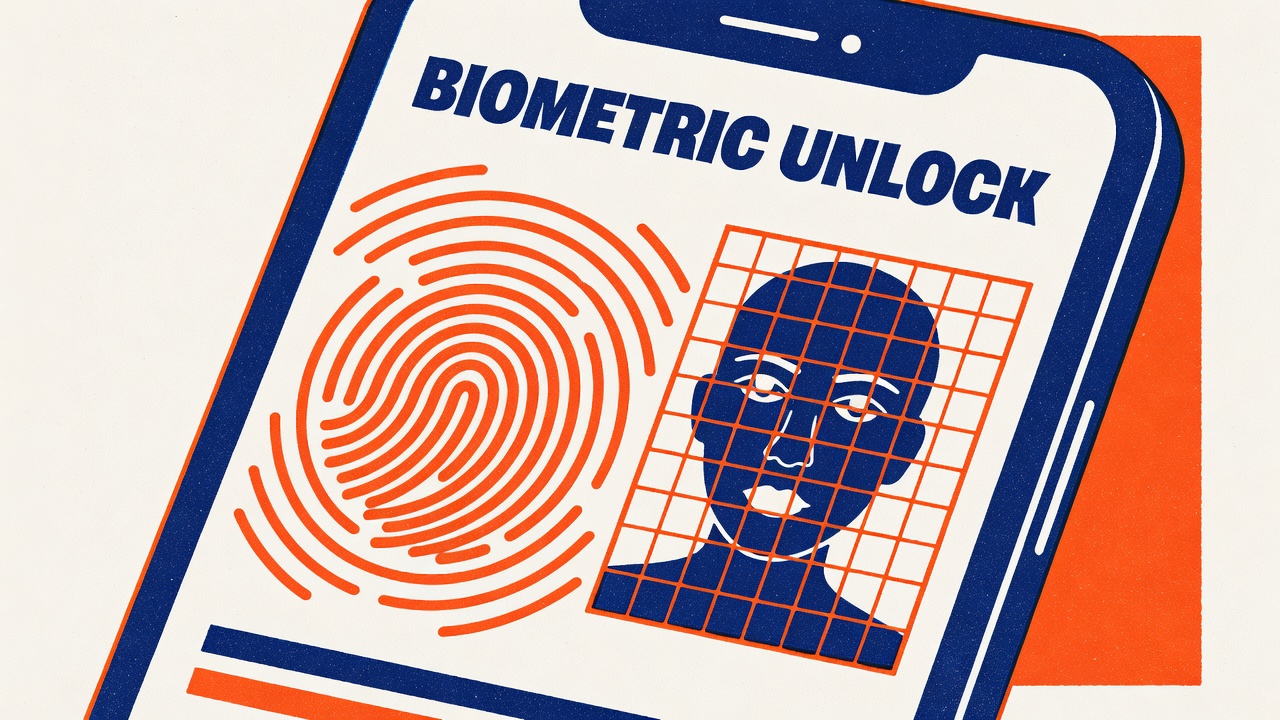
Touch ID on iPhones arrived in 2013. Face ID in 2017. By 2020, casino apps began integrating these biometric authentication systems. The appeal is straightforward: players no longer enter passwords. Touch your finger to the home button (or look at the camera). The app recognizes you and grants access. Friction reduced to near-zero.
From the operator's perspective, biometric login is a retention tool. Players use apps with frictionless authentication more frequently. A player with a 20-character password might open their sportsbook app once per day. The same player with Touch ID might open it five times per day. Friction and convenience drive usage. Operators know this and have made frictionless authentication a competitive feature.
The security theory supporting biometric authentication is straightforward: your biometrics are unique to you, difficult to steal, and difficult to forge. A password, by contrast, can be written down, shared, or guessed. Biometrics seem superior. They are not, in every context.
Threat Model Shift
Password authentication is vulnerable to phishing (the user is tricked into entering their password on a fake site), credential theft (the password database is breached), and weak passwords (the player chooses something guessable). Biometric authentication eliminates these vectors. But it introduces new ones.
First, biometric authentication requires the user's device to be unlocked or proximity-verified. If your phone is stolen, the thief has access to your unlocked device. A Touch ID casino app sitting on an unlocked phone is immediately accessible. A password-protected app is not. This inverts the security model: the device itself becomes the authentication factor instead of knowledge. The physical security of the device now matters more than password strength.
Second, biometric data, once compromised, cannot be reset. If the casino app is hacked and facial recognition data is exfiltrated, your face is now compromised as an authentication factor. You cannot change your face. A password, compromised, can be reset immediately. Biometric compromise is permanent and affects your authentication at every site that uses facial recognition.
Third, most casino apps store the biometric data (or a hash of it) locally on the device, not on the casino's server. This reduces the casino's liability if their servers are breached. But it means the weak link is now the device: whoever controls your unlocked phone controls your app. Many phone users do not update their OS regularly. A known vulnerability in the phone's biometric verification could allow a local attacker to bypass authentication.
"Biometric authentication shifts the threat model from knowledge-based (stolen passwords) to possession-based (stolen phone) and physical (forged fingerprints or faces)."
Forensic duplication of fingerprints is possible (high-quality photos or 3D-printed fingerprints can fool some sensors). Facial recognition systems are vulnerable to presentation attacks (holding up a photo of the user to the camera). These attacks are not trivial; they require technical sophistication. But they are possible. A motivated attacker with access to a player's phone could potentially authenticate as the player using these methods.
Implementation Variance
The security of biometric authentication depends entirely on implementation. Some apps delegate biometric verification to the phone's OS (iOS Face ID, Android Biometric Framework) and never handle biometric data directly. This is stronger: the casino app never sees the actual biometric and relies on the OS to authenticate. Other apps implement their own biometric verification logic. This is weaker: a bug in the app's verification code could bypass authentication entirely.
Investigate whether your casino app delegates biometric authentication to the OS or implements it internally. You can do this by checking the app's help documentation or contacting support. An answer like "we use the device's native Face ID" is a stronger implementation than "our biometric verification system."
Account Recovery Implications
Another issue: account recovery. If your password is forgotten, you can reset it through email or SMS recovery. If your biometric authentication fails (device broken, new phone), the recovery process typically reverts to password-based authentication. You need a password to recover access when biometrics fail. This means the strong authentication (biometrics) depends on the weak authentication (password) as a fallback. The chain is only as strong as the weakest link.
Recommendation: use biometric authentication for convenience on personal devices, but maintain a strong, unique password as a recovery mechanism. Do not rely on biometrics as your sole authentication method. Update your device OS regularly to patch biometric system vulnerabilities. Enable additional app-level security features (withdrawal PIN, email confirmation) if the casino app offers them. Biometrics is convenience with a different threat model, not categorically stronger security.
Rooms for this read
Share this read