UFC Prop Betting: Finding Edges Beyond the Moneyline
UFC prop betting has expanded far beyond moneyline wagers. Round totals, method-of-victory, and fighter-specific over-unders create opportunities for bettors who understand fight dynamics better than market makers do.
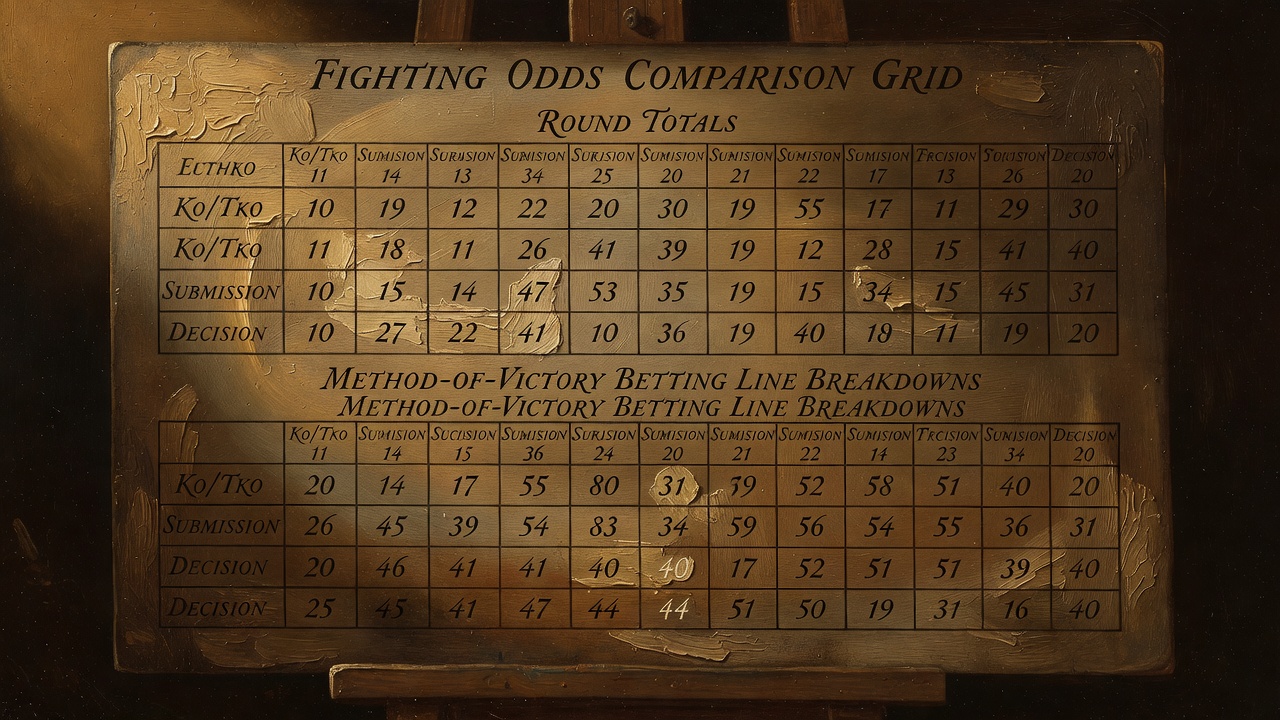
I remember when the only bet available on a UFC fight was the moneyline. You picked a fighter. Win or lose. Done. The Atlantic City sportsbooks in the 1990s offered similar simplicity: fighters were treated like boxers, and wagering was structurally identical. Now there are dozens of prop markets on a single main event bout.
The moneyline is the house's safest product. The books employ algorithms and expert consensus to price fighters efficiently. The gap between what you can win and what you should win is small. Moneyline bets on chalk (favored fighters) pay 100-120 for 100 wagered. That's a thin margin. Books rely on volume and balanced books to profit. You are playing against the aggregate intelligence of professionals.
Proposition bets are different. They represent edge opportunities because markets are thinner, because public perception of specific outcomes diverges from true probability, and because most casual bettors lack expertise in fight biomechanics. This is where the money lives.
Method of Victory
A method-of-victory prop offers options: knockout, submission, or decision. Sounds straightforward. Most casual bettors treat method of victory as a coin-flip alternative to the moneyline. They are wrong. Fighter style and fighting history carry real information. A wrestler's record against opponents without wrestling backgrounds suggests submission or decision as the likely outcome. A striker with heavy hands suggests knockout at elevated probability. Yet public betting on method of victory often ignores this.
Example: Fighter A is a BJJ black belt with five submission wins in twelve fights. Fighter B is a striker with no submission background. Method-of-victory markets often price submission and knockout at equal probability. This is incorrect. The actual probability of submission is substantially higher. Bettors who recognize this edge can find value at even odds where true probability is 2:1 or worse.
Where does the edge come from? Casual bettors anchor to recent fights. If a fighter's last bout ended in knockout, public money floods the knockout side regardless of opponent matchup. Sharp bettors avoid the crowd. They study career statistics, fighter matchups, and training camp changes. A fighter who switched camps or hired a new wrestling coach shows up as a subtle signal in historical data. This signal has not yet reached the market.
Round Totals and Fight Length
Round totals (will the fight finish inside or outside 1.5 rounds, 2.5 rounds) represent another edge. Fight length is partially predictable from style matchup. Two strikers tend to produce faster finishes than striker versus wrestler. Yet books often price round totals without sufficient weight given to fighting style interaction. Bettors who model fighting styles (striker versus grappler, pace preferences, injury history affecting durability) can identify underpriced outcomes.
A fighter returning from injury often sees public betting shift toward knockout or aggressive outcomes. The perception is "they want to win quickly." The reality is often the opposite: an injured fighter limits damage, fights defensively, and allows the bout to extend. This perception-reality gap creates opportunity.
Over-Unders on Specific Fighter Metrics
Some books now offer over-unders on significant strike attempt totals, submission attempts, or takedown attempts. These are niche props, but they illustrate the frontier. A fighter known for defensive wrestling but high striking volume might see over-under on strikes set too high. Defensive strikers throw fewer strikes than aggressive ones. The stat is predictable from fighting style.
The edge in prop betting comes from three sources: (1) personal expertise about fighter styles and matchups, (2) awareness of recent changes in training, coaching, or approach, and (3) willingness to fade public perception. The sportsbook does not beat you on moneyline through handicapping skill; they beat you through volume and the vig. On props, they beat you only if you lack edge. Find the edge and exploit it.
"Moneylines are efficient. Props are inefficient. Market inefficiency is where value lives."
The catch: you need genuine expertise. You cannot wing it. The casual bettor who thinks they know fighting better than the pros should expect to lose money. But the bettor who studies statistics, tracks fighter progression, and understands biomechanics can find persistent advantages. This is the high-effort path. It is also the profitable one.
Rooms for this read
Share this read