Why Some Casinos Publish Payout Percentage Reports
A few casinos publish monthly or quarterly reports showing the actual payout percentages of their machines. This transparency is strategic, not required by law.
The Practice in Europe
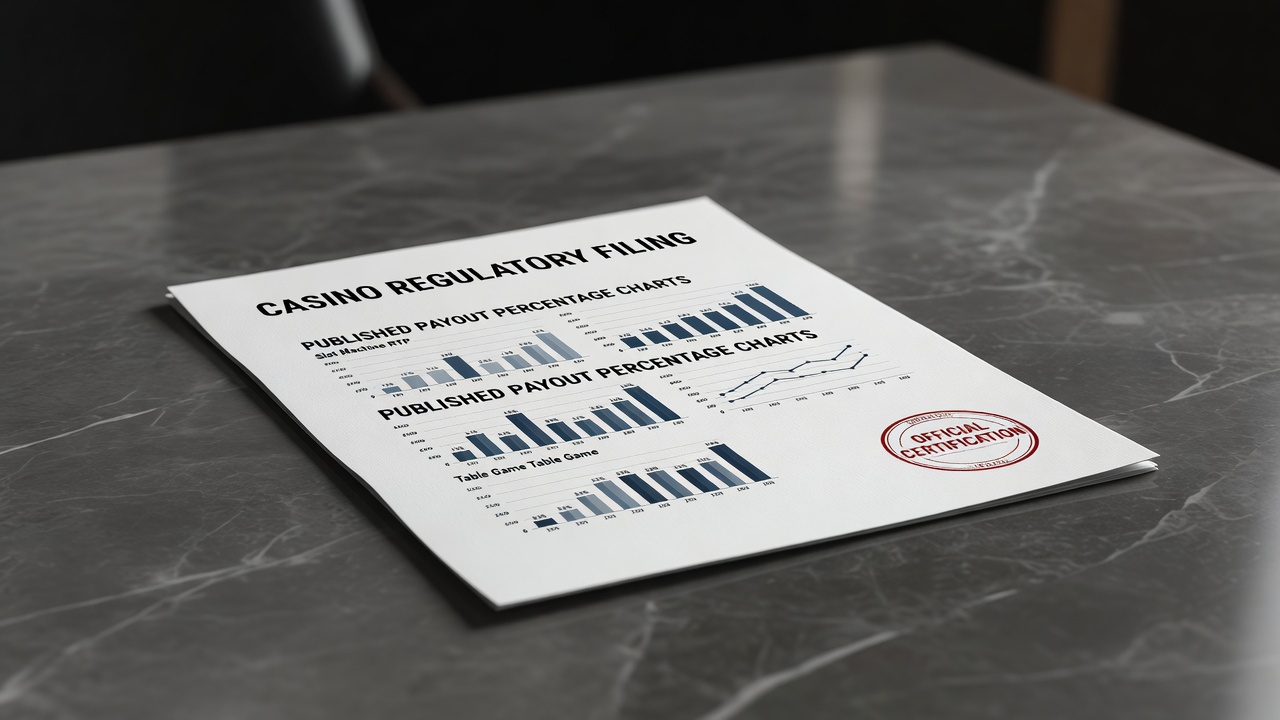
I spent a summer in Vienna observing a particular casino's operations. I watched the floor, spoke with dealers, learned the languages of the machines. The casino, like many European establishments, published quarterly reports. These reports showed, by machine type, the percentage of player money returned.
I asked the floor manager why. He said, "The players want to know they are not being cheated. We show the data, so they know." This made sense as a business strategy. It is a form of trust-building. In a regulated market where players have alternatives, transparency can be a competitive advantage.
The practice is most common in jurisdictions where licensing requires it. The United Kingdom, under the UKGC, has rules about how data must be disclosed. The Netherlands has similar requirements. Sweden mandates transparency in reporting.
The Mechanics of Publishing
A casino publishes a report showing "Month of August: Average RTP across all slot machines: 95.2%. Payout percentage by machine type: Reels 94.8%, Video Slots 95.6%, Progressive 96.1%." The data is real. It is calculated from millions of spins.
The format of the report matters. Some casinos publish machine-by-machine data. Others publish only aggregated data by category. The difference is significant for players trying to understand individual machines.
Publishing actual data requires auditing. The casino must have independent accountants verify the numbers. This costs money. Only casinos that see a business advantage to transparency do this.
Why Strategic Casinos Do It
A casino in a competitive market uses transparency as marketing. If Casino A publishes reports showing 95% average RTP, and Casino B does not, players make assumptions. Casino B might be more profitable to the house, or it might just be less transparent. Either way, the lack of data creates doubt.
Casino A captures that player attention. Informed players know that 95% is within normal range (Nevada casinos are often 95-97%, depending on the game). Informed players will choose the transparent casino over the opaque one, assuming other factors are equal.
For a casino with licensing concerns, transparency is also defense. If a regulator questions the casino's payouts, the casino can produce reports showing compliance. If a player files a complaint claiming the machines are rigged, the casino can point to published audits.
The Information Asymmetry
But here is the key detail: most players do not actually read the reports. A casino publishes payout percentages in a dense PDF on page seven of their corporate governance section. They are legally transparent but practically invisible.
I observed this in the Vienna casino. A player complained that the machines were not paying. The floor manager offered to show him the published report. The player did not want to see it. He wanted the machine to pay him. The report did not matter to him.
This is why casinos are comfortable publishing. They get the benefit of transparency (regulatory compliance, competitive positioning) while the actual information remains largely unread. It is transparency theater.
The Self-Selection Effect
Casinos that publish are usually regulated, licensed casinos in first-world jurisdictions. These casinos tend to have higher standards across the board. Their customer service is better. Their odds are genuine. Their dispute resolution is fair.
Unregulated or loosely regulated casinos, by definition, do not publish audited reports. They have no incentive to. Their players have no recourse if they claim the numbers are false.
So when a casino publishes reports, the signal is more about jurisdiction and regulation than about the specific numbers. A licensed casino in Malta is probably more trustworthy than an unlicensed casino in a jurisdiction with no gaming oversight, regardless of what payout percentages they claim.
The Numbers Themselves
Published RTP figures are almost always in the range of 93% to 97%. This is not a coincidence. It is the range that appears legitimate. If a casino published 98% RTP, it would raise suspicion (too good to be true). If it published 88%, it would discourage play (too low).
Casinos adjust their game selection and machine mix to land in the publishable range. They set the games they offer knowing what the aggregate RTP will be. Then they publish it.
The report is not a mistake. It is designed. It says "we are trustworthy enough to publish, and we publish numbers in the acceptable range." Nothing false in that. Just carefully constructed presentation.
What Players Should Actually Do
If you are choosing between casinos, publication of reports is a positive signal. It indicates regulation and oversight. But do not spend hours analyzing the data. The differences between 95% RTP and 95.4% RTP are noise. Both are fair.
Instead, check: Is the casino licensed by a recognized regulator? If so, you have recourse if something goes wrong. Does the casino publish reports? If so, you have transparency. Are the games from reputable providers like Pragmatic Play or Microgaming? If so, the code is audited.
The publication of payout reports is good. It is a sign of a serious operation. But it is not the most important factor. Regulation and licensing matter more. And even with perfect transparency, the math always favors the house.
Rooms for this read
Share this read