How Online Casino Deposits Work: A Step-by-Step Overview
The mechanics of moving money into an online casino account are far more layered than they appear, involving regulation, fraud prevention, and vendor relationships that the player never sees.
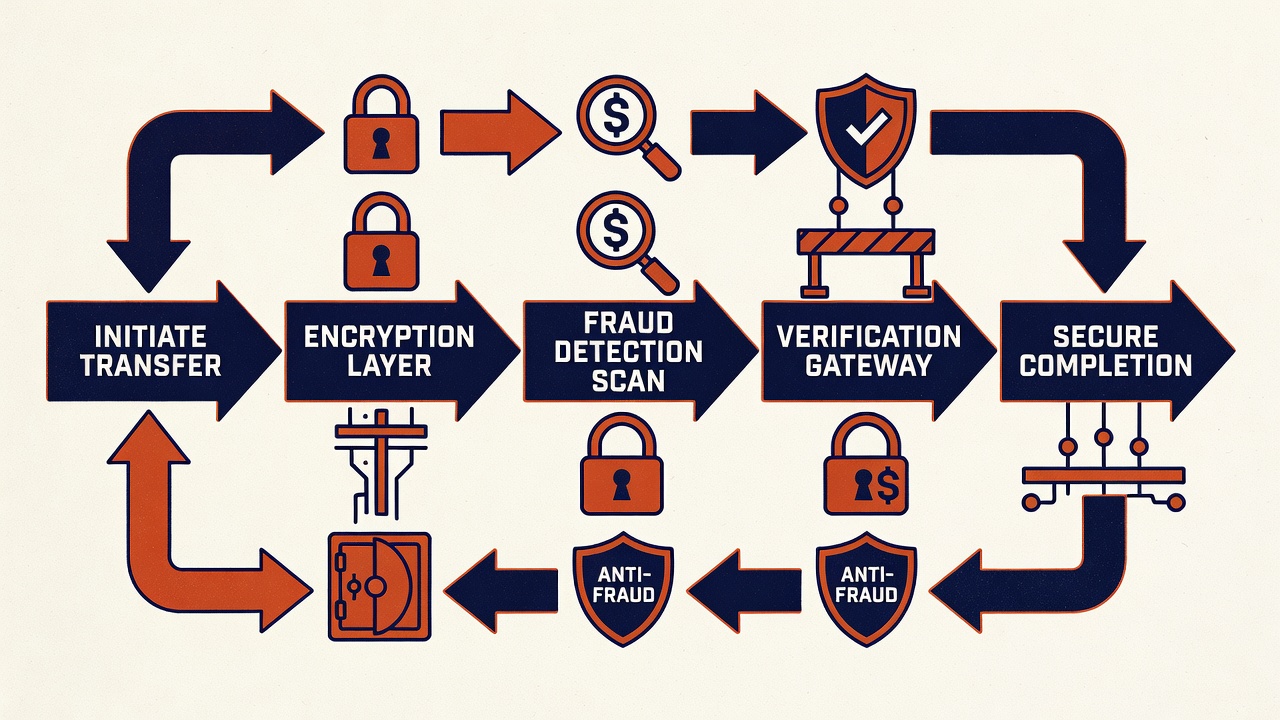
The moment a British player clicks the deposit button at an online casino, procedural machinery engages behind the scenes. What appears simple is, in fact, a choreography of partnerships, regulatory obligations, and technological middleware that transforms a domestic banking instruction into an account credit thousands of miles away.
The fundamental principle governing this entire ecosystem is the separation between the player's bank account and the operator's operations. Operators themselves are not banks, nor do they hold customer deposits in house. Instead, they contract with payment processors and acquiring banks to mediate every transaction. Companies like Worldpay, Stripe, and Square, along with gambling-specific payment gateways such as Paysafe and EVO, act as intermediaries. A Londoner depositing twenty pounds does not send money to the casino operator directly; that sum enters a processing network first.
The deposit flow typically unfolds as follows. The player selects a payment method at the casino's cashier interface. The system presents options: credit card, debit card, e-wallet (PayPal rarely appears in the UK market, though Skrill and Neteller remain common), bank transfer, or prepaid vouchers like Paysafe. Once a method is chosen, the player is routed to either the casino's own payment page or a third-party gateway, often hosted on a subdomain that redirects the browser away from the main site.
That redirect is not accidental. It is a regulatory and security measure. Payment Card Industry Data Security Standard (PCI-DSS) compliance dictates that the casino operator's systems never directly touch the player's card details. Instead, payment gateways tokenise the information, converting sensitive card data into a unique string that can be referenced in future transactions without ever storing the original numbers.
The Steps Involved
Once the player submits their payment information, the processor performs several verification checks simultaneously. It confirms the card is not on any fraud blacklist. It pings the issuing bank to check whether the transaction amount exceeds daily limits set by the cardholder. It checks whether the card's issuing country matches the player's claimed country of residence. If the operator is licensed in a jurisdiction with strict AML (Anti-Money Laundering) obligations, the processor may cross-reference the transaction amount against threshold rules.
Assuming these checks pass, the processor sends an authorisation request to the player's bank. The bank's computer systems respond with one of three answers: approved, declined, or refer to issuer. The player sees a result within seconds, though the underlying conversation between processors can take several seconds. If approved, the funds are not immediately available to the player's bank account balance; instead, the bank places a temporary hold on those funds. The funds settle over the next one to three business days, moving through the interbank network.
However, the casino player sees their balance credited almost instantly. This is because the operator does not wait for the settlement. It trusts that the processor's approval is reliable. The operator's accounting systems record the deposit as completed and allows the player to wager immediately. If the transaction later fails or the bank reverses it (a chargeback), the operator suffers the loss directly.
For operators, the cost of this convenience is significant. Each transaction incurs a discount rate of 2 to 4 percent paid to the processor and acquiring bank, plus a flat per-transaction fee of 20 to 50 pence.
For players depositing from outside the UK, the mechanics become more complex. A German player cannot use their local debit card at most UK-licensed operators without triggering additional AML checks. This is why many operators partner with regional payment processors. In Germany, SOFORT and giropay remain common. In Sweden, players use Swish. In the Netherlands, iDEAL dominates. Each of these regional solutions integrates with local banking infrastructure in ways that bypass the need for currency conversion.
Currency conversion, when it occurs, adds another layer of complication. A Canadian player depositing in Canadian dollars will see their funds converted to pounds at a wholesale rate determined by their processor. Most processors mark up this rate by 1 to 3 percent, a revenue stream that is rarely transparent in the operator's fee disclosure. Savvy players deposit via bank transfers whenever possible, since bank-to-bank transfers use interbank rates rather than processor markups.
The minimum deposit at most UK operators sits between five and ten pounds, though this figure varies by payment method. Credit cards allow minimums as low as five pounds. E-wallets like Neteller accept deposits as small as one pound. Bank transfers typically require minimums between ten and fifty pounds because the fixed costs of the transfer are higher. Maximum deposits exist as well, though they are often set high (five thousand pounds per transaction) because the operator benefits from higher deposits.
Once the deposit is credited to the player's casino account, the money exists in a segregated account held by the operator or a licensed custodian, under regulations that stipulate these funds must remain separate from the operator's operating revenue. The player can then use this balance to place wagers, but the moment they do so, they have no contractual claim to that money; it exists as a betting instrument only, governed by the operator's terms.
The entire deposit process, from button click to playable balance, typically takes between ten and thirty seconds. Yet behind that instant lies a considerable machine: multiple processor verifications, regulatory checks, bank confirmations, and fraud prevention algorithms, all running in parallel. This is why some deposits fail silently, why others are declined without clear explanation, and why high-value deposits from new players sometimes trigger manual review.
Rooms for this read
Share this read