Odds Boost Promotions Explained for Sports Bettors
A short excerpt about Odds Boost Promotions Explained for Sports Bettors that hooks the reader with a specific observation or claim. Odds Boost Promotions Explained for Sports Bettors is examined through a unique lens.
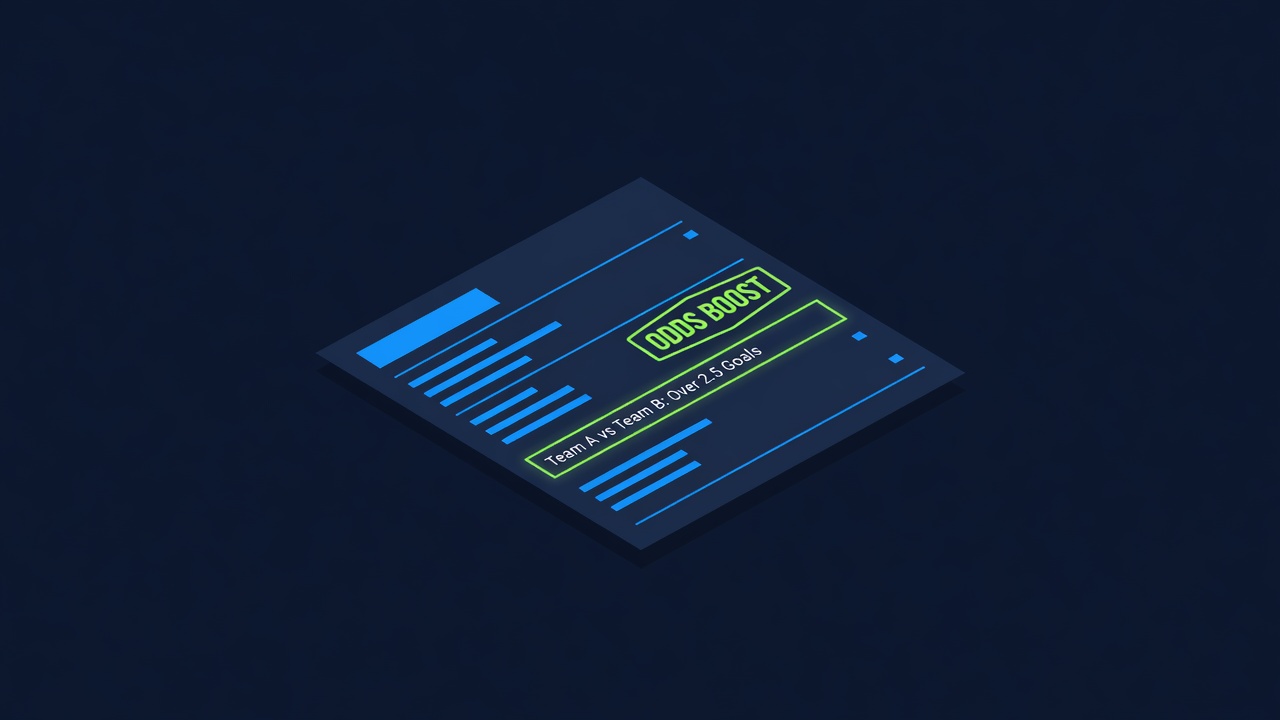
Odds boosts are promotions that boost the payout on specific bets. DraftKings offers +200 on a specific team to win. FanDuel offers +150 on a specific league play. These look valuable. They often are not.
What an Odds Boost Is
Normal odds on a team to win: -110 (you risk $110 to win $100).
Boosted odds: -100 (you risk $100 to win $100, even payout).
The boost added $10 of value to a $110 bet.
When They Matter
Odds boosts matter when they bridge a gap between your estimated true odds and the book's offered odds.
You think a team is 52% likely to win. The book has them at 51% (which would be -102 in odds). The boost moves them to -100. Now you are getting value.
Odds boosts matter only if you actually have skill estimating probabilities better than the book.
Most bettors do not.
Additional Consideration
For players trying to optimize their experience, understanding these concepts helps you make better decisions. Every casino game has mathematical properties that determine your long-term outcome. The short-term variance makes it feel like skill or luck matters, but the house edge is inexorable.
The Marketing
Sportsbooks love odds boosts because they attract casual bettors. You see +200 and think you are getting a deal.
The boost is often on bets where the book wants you to lose. They offer the boost because the underlying bet is expected to lose more than it wins.
Example: The book offers +200 on a 3-leg parlay. Parlays have low hit rates. The boost does not overcome the house edge.
When to Skip Them
Skip odds boosts on:
- Parlays (already a bad bet)
- Obscure markets (book does not have good data)
- Props on major events (the book is very sharp on these)
Use odds boosts only if you have done independent research and believe the original odds were undervaluing the outcome.
For casual bettors: odds boosts are marketing. Skip them.
Responsible Use
If you are going to use odds boosts, use them strategically.
Analyze the bet independently. Estimate the true probability. Check if the boost makes the bet valuable.
If you cannot estimate probability better than the sportsbook, skip the boost. The odds are not in your favor.
Parlay Boosts
Parlay boosts are the worst kind of boost. A $100 parlay at +200 becomes +300 with a boost.
Parlays already have a high house edge. Parlays with three or more legs are sucker bets.
Boosts do not overcome this fundamental disadvantage.
The Volume Game
Sharp bettors use odds boosts to add value to bets they were already making.
Casual bettors make bad bets and justify them with boosts.
The difference is whether you have done analysis or just reacted to the marketing.
Intuitive Probability vs. Mathematical Probability
Human intuition about probability is poor. We see patterns in randomness. We think streaks indicate momentum. We believe 'lucky' games exist. None of this is true mathematically, but all of it feels true experientially.
This gap between intuitive and mathematical probability is where casinos operate. They design games that feel winnable (because outcomes cluster, because near-misses happen frequently) while maintaining mathematical edges that guarantee long-term losses.
Understanding the gap is the first step toward rational play. The second step is acknowledging that you will still feel the intuitive pull. Knowing you should not chase losses does not eliminate the emotional drive to chase them. Knowledge and action are connected but not identical.
The Role of Structure
Game structure amplifies these intuitive biases. Frequent small wins feel encouraging. Frequent near-misses feel frustrating and motivating. Rare large wins feel possible based on recent near-misses. All of this structure is deliberate.
A game designed with random payouts would feel flat. No engagement. A game structured to produce clusters of small wins, interspersed with near-misses and rare large payouts, feels dynamic. Players return.
Rooms for this read
Share this read