Omar Sharif: Bridge Champion and Hollywood's Greatest Card Player
Omar Sharif won the World Bridge Championship in 1970 and published a bridge column in The Times. He was not a slots player or a casual card player. He was a serious competitive player with mathematical training.
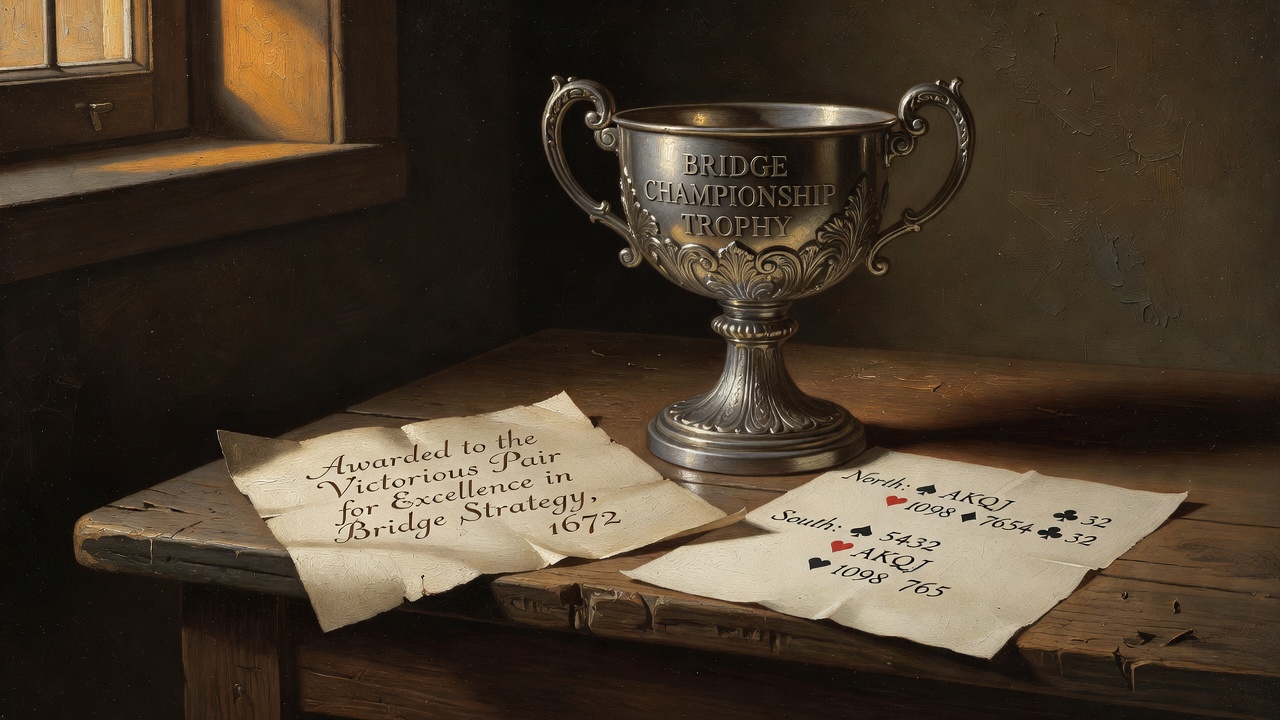
The Early Years and Bridge Discovery
Michel Chalhoub was born in Alexandria, Egypt, in 1932. He began playing bridge in his early twenties, while studying mathematics at Victoria College in Cairo. By his mid-twenties, before his film career had taken off, he was already competing at the national level in Egyptian bridge tournaments.
Bridge is a partnership game played with a standard fifty-two-card deck. It requires memory, mathematical thinking, and an ability to infer information from your partner's bids and plays. It is not primarily a game of luck. The best players can demonstrate consistent advantage over weaker players across large sample sizes.
Sharif's film career began in 1954 with Egyptian productions. But his interest in bridge continued. By the late 1950s, as his Hollywood career accelerated with roles in "Lawrence of Arabia" (1962) and "Doctor Zhivago" (1965), he was already traveling to international bridge tournaments.
The World Championship and Competitive Play
In 1970, Sharif partnered with the Italian player Giorgio Belladonna at the World Bridge Championship held in Stockholm. Belladonna was recognized as one of the premier bridge players in the world. Sharif played at the same level. Their partnership won the championship, defeating twenty-two other partnership teams in competition.
The 1970 World Bridge Championship is documented in tournament records held by the World Bridge Federation. These records show Sharif played a mathematical, precision-oriented game. He bid conservatively. His card play demonstrated strong memory and probabilistic thinking.
After the 1970 championship, Sharif increased his competitive output. He began writing a weekly bridge column for The Times of London, a position he maintained from 1972 to 1990. The columns were technical, addressing complex bidding situations and endplay problems. They were not for casual players.
Bridge vs. Card Games of Chance
Bridge is fundamentally different from games like blackjack or baccarat, which Sharif famously enjoyed in casinos. In bridge, outcomes depend on skill, memory, and logical inference. In pure chance games, outcomes are determined by randomness. Sharif was expert at both, but for different reasons.
A card counter at blackjack uses memory to track ratios of remaining cards. Sharif could have done this easily, given his mathematical training. But blackjack lacks the partnership element that made bridge compelling. In blackjack, the player is alone against the house. In bridge, the player is in conversation with a partner through bidding. The game is about information exchange, not about beating a mathematical house edge.
The Celebrity Gambler
Sharif's casino play became legendary. Stories from the 1960s and 1970s document him playing baccarat at Monte Carlo and other European casinos. He was known to play for high stakes and to lose substantial sums. One account from a 1974 interview in the Los Angeles Times quotes him saying he had lost approximately 1.2 million dollars at cards and gambling over his lifetime to that point.
These losses occurred at games of pure chance: baccarat, roulette, sometimes blackjack played recreationally without counting. This is important. Sharif was a mathematical player. He understood odds. He chose to play games where mathematical advantage was not available to him. This suggests his casino play was entertainment, not a profit motive.
The Bridge Legacy
Sharif remained active in bridge until his death in 2003. He published two books on bridge strategy: "The Bridge Player's Alphabet" and "Omar Sharif's Life and Bridge." These were technical works, not introductions for casual players.
During the 1980s and 1990s, he appeared at bridge tournaments and in bridge media. A 1989 profile in Bridge Today magazine noted that Sharif had maintained a consistent partnership with Italian bridge player Pierre Jaïs. Together they won the European Bridge Championship in 1982.
Bridge federations from multiple countries honored him. The Egyptian Bridge Federation named him an Honorary Life Master. The World Bridge Federation acknowledged him as a champion.
The Distinction That Matters
Popular culture often conflates all gambling into a single category. Sharif is remembered as a gambler because he played casinos. But the casinos were one part of his play, and probably the less skilled part. His real competitive life was in bridge.
This distinction matters because it shows how a mathematical mind can engage with games of chance without illusion. Sharif did not believe he could beat baccarat. He was not looking for an edge. He was looking for entertainment. His real skill play was bridge, where edges exist and skill determines outcomes.
He played bridge to win. He played casino games for the experience. Understanding this difference is the best legacy of his life as a card player.
Rooms for this read
Share this read