How to Bet on NFL Totals Profitably
NFL totals (over/under point totals) are often mispriced compared to actual game conditions. Bettors with superior weather analysis or team-specific knowledge can find value.
Listen. NFL totals move differently than spreads. The spread is efficient because every bettor, sharp and casual, cares about it. Totals are softer because casual bettors care mostly about who wins. This creates opportunities for anyone paying attention.
A total is set at 48 points. The under pays better (the sportsbook is trying to balance action). You think the game will end 24-17? That is 41 points total. You like the under. This is a numbers game. You estimate the true total at 41. The market offers 48. That is a 7-point gap. If you assess your estimate as accurate within 2-3 points, you have significant edge.
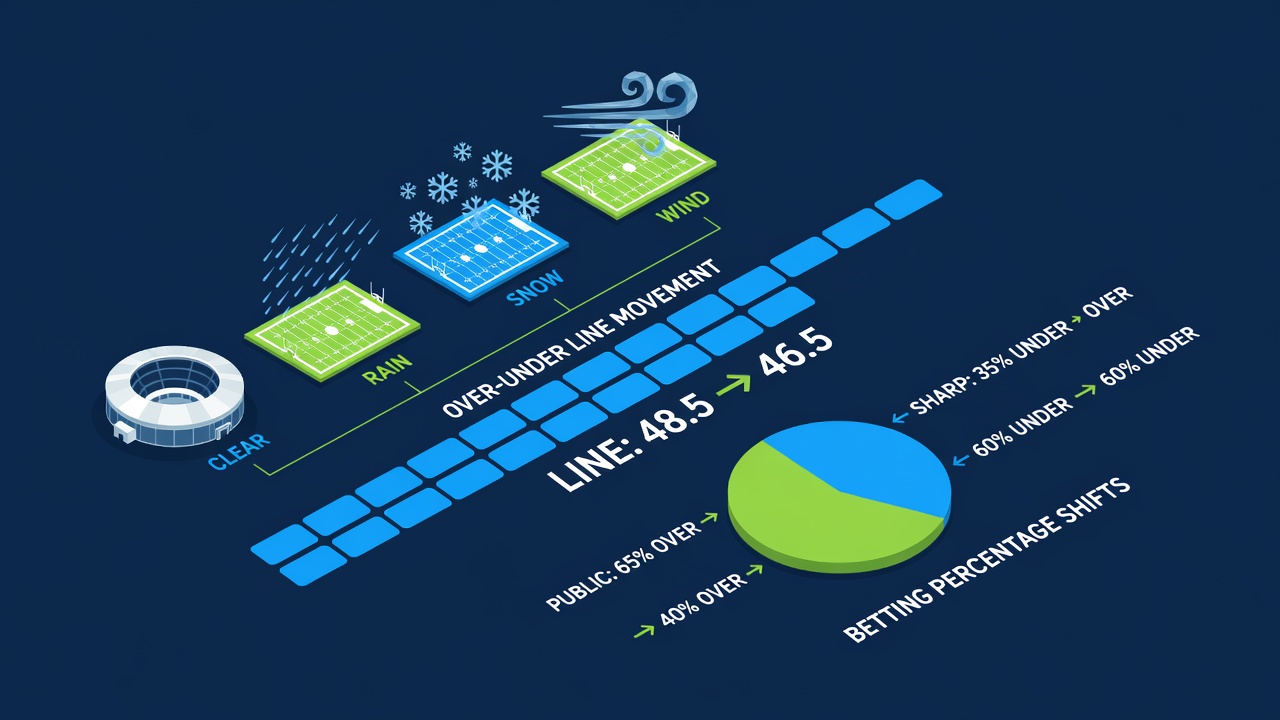
Weather matters massively for totals. Wind reduces passing efficiency dramatically. Rain reduces passing. Cold reduces passing (balls are harder to grip, harder to throw accurately). A game forecast to have 25mph winds should produce fewer points. If the total is set assuming calm weather, the under is undervalued.
Team-specific factors also drive totals. Two teams with below-average defenses will produce more points. Two teams with elite defenses will produce fewer. If the market is slow to recognize a defensive change (new defensive coordinator, traded edge rusher), there is edge. Similarly, if one team recently acquired an elite wide receiver and the market has not fully adjusted, the over might be undervalued.
The Mechanics
Kick times matter. Early games (10am kickoff) produce fewer points than afternoon games (1pm). This reflects circadian rhythm and player performance timing: afternoon performances are stronger. If an over-under is set assuming 1pm kickoff but the game is scheduled for 10am, the under gains value.
Rest advantage is real. A team playing on five days rest (Thursday night game after Sunday) performs better. A team playing on four days rest underperforms. If one team has rest advantage and the market has not adjusted total expectations, there is an angle.
Key injuries can swing totals substantially. An elite quarterback injured changes the passing game fundamentally. An elite pass rusher out changes the defensive dynamic. The market sometimes prices these in slowly, especially if the injury is announced midweek and the total was set early in the week.
"Totals are inefficient because casual bettors focus on winners, not point totals. This gap creates persistent opportunities for people who study the details."
One approach: model game outcomes yourself. Estimate likely score. Plug in weather, injuries, rest, and team-specific factors. Compare your estimate to market. If there is a gap of 4+ points, you have sufficient margin for error to bet confidently.
Track your model over time. Most casual bettors will find their estimates are not as accurate as they think. The sportsbook's estimate is the result of hundreds of sharp bettors' opinions aggregated. Your estimate should be significantly better before you bet substantial money.
One final point: totals are sticky. The market sets a number based on opening action. If casual bettors bet over consistently, the line moves up, not down (the house is trying to attract under bettors to balance). This means the movement often reflects public betting preference, not sharp opinion. This stickiness creates opportunities if you are betting against public sentiment.
Rooms for this read
Share this read