How to Read a Horse Racing Form and Past Performances
A horse racing form condenses a horse's entire competitive history into columns of numbers. Learning to read it is learning a specialized language that reveals what bettors should actually understand about each horse.
I spent years embedded in a backroom poker game in the Nevada desert. The players were semi-professional. They all wagered on horses. Horse racing was the secondary activity that supplemented poker income. What fascinated me was how seriously they took form study. These were not casual bettors. They were analysts who understood their medium completely.
A racing form is a document printed daily by Racing Form, providing information on horses running that day. It includes past performance data: the horse's age, weight, jockey, trainer, recent race results, and statistical summaries. It is essentially a compressed biography of each horse's competitive record.
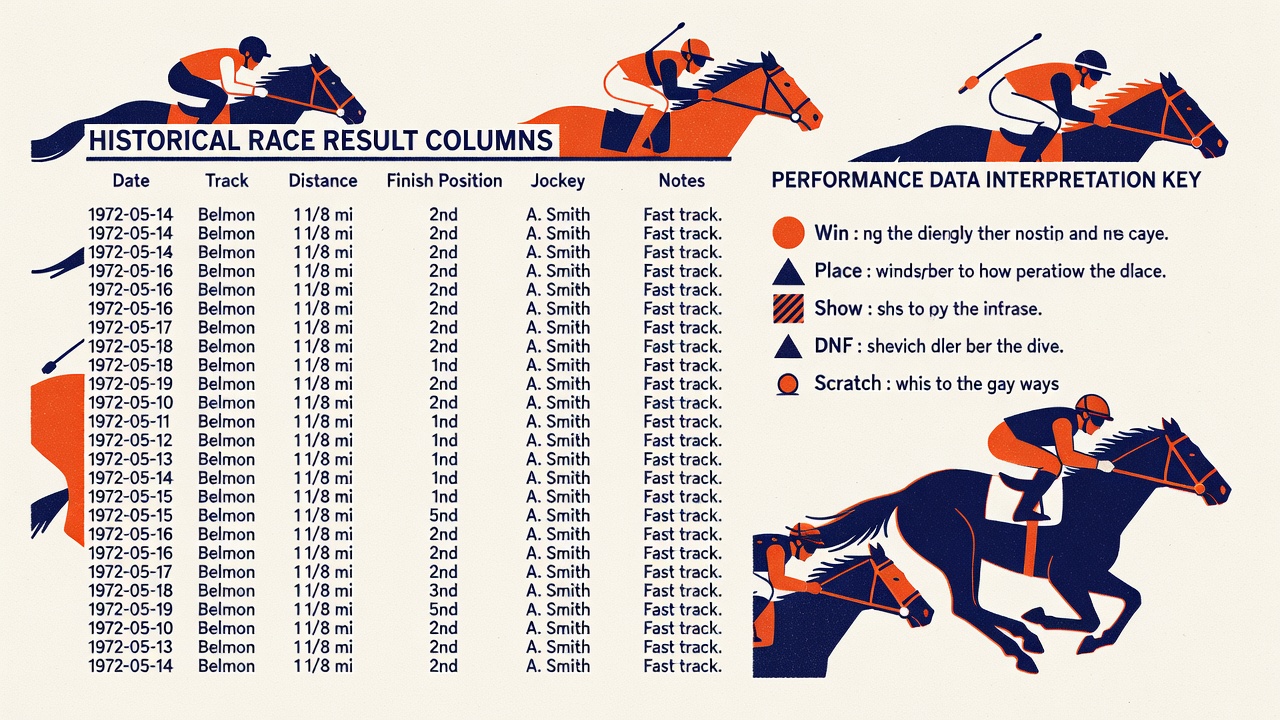
The column headers require decoding. PP is post position (where the horse starts). Wt is weight carried. Jockey's name is listed. Track is the racing surface. Distance is how far the race goes. Time is the result. But the key information is in the numerical data columns. Those columns tell a story.
Race-by-race results show finish position, but that alone is insufficient. A horse that finished fifth two races ago might have been blocked or mishandled by the jockey. Fifth place does not mean the horse ran like a fifth-place horse. The numbers need interpretation.
What serious form readers examine: workout times (how the horse trains between races), post position trends (does the horse do better from inside or outside posts), track conditions (does the horse run better on fast or sloppy surfaces), pace figures (how the horse compares to others when running at a specific speed), and class levels (is the horse moving up or down in competition quality).
The Key Statistics
Speed rating is a number representing how fast the horse ran relative to track standard. A speed rating of 90 means the horse ran 10 points above par. A speed rating of 70 means 20 points below par. Comparing speed ratings across horses tells you which ones are objectively faster. But speed rating assumes all races are equal, which they are not. Racing conditions, track bias, and distance all affect the validity of comparison.
Earnings reflect money won. A horse with high earnings has been successful, but high earnings can also mean the horse races at cheaper levels and wins consistently. A horse with lower earnings might race at higher levels and compete without winning. Earnings alone do not determine current class.
Race dates matter. A horse that raced five days ago is fresher than a horse that raced thirty days ago. But a horse that raced thirty days ago has had rest and training. The optimal interval depends on the individual horse. Some prefer frequent racing; others need longer recovery.
"A racing form compresses years of performance into data. Reading it is learning which data matters and which is noise."
Track bias is critical and often overlooked by casual bettors. Some tracks favor outside horses; others favor inside horses. Some favor speed; others favor closers. This bias can change day to day based on weather and track preparation. A serious form reader studies track bias for each individual track and day.
Jockey changes are significant. A horse might run poorly with one jockey and well with another. This reflects communication and style fit, not the horse's quality. If a horse is switching to a jockey known for success at the track or distance, that is a positive indicator.
Trainer changes signal something also. A new trainer might implement different strategies, training methods, or conditioning routines. If the horse was running poorly under the previous trainer and has switched to a trainer known for resurrections, this is meaningful.
The form is a tool, not a prediction. Reading it accurately gives you information. Converting that information into a profitable bet requires additional analysis: comparing your assessment against market odds, determining whether the odds offer value relative to your probability estimate, and managing bankroll over many bets. Most casual form readers never reach that stage. They gather information but cannot convert it into profit.
Rooms for this read
Share this read