Craps: From Hazard to America's Favorite Dice Game
Craps arrived in New Orleans as a slave's game. It became an American institution through a combination of mathematics, hustling, and soldiers needing a fast game in barracks. The case history reveals how a street game becomes legitimate.
You're looking at the lineage of craps, and what you're really.
The Origins in Hazard, 1500s to 1800s
The ancestor is a game called Hazard. English. Played with two dice. The mathematics are brutal. One player, the caster, wins or loses based on the rolls. The other player wins or loses betting against them. The game was rigged more often than it was played straight. Professional hustlers controlled the outcomes through shaved and loaded dice. Hazard moved from the English gentry to the lower classes in the American colonies.
By 1750, Hazard was common in New York and Boston. The game's weakness was its complexity. Seven possible outcomes on two dice, but the bets themselves required knowledge. Odds moved based on the point number. Most players could not calculate odds in real time.
Enter Bernard de Mandeville. London, 1720s. Mandeville was a game theorist and physician who understood that simplification is profit. He created a faster version of Hazard that reduced the house advantage and increased the number of rolls per game. The math simplified. More players could follow the action.
The New Orleans Transformation
Creole and African American players in New Orleans took Mandeville's simplified Hazard and made it theirs. By 1800, the game had a new name: Craps, likely from the term "crabs," meaning twos, which was a losing roll. The game spread up the Mississippi River on the steamboats. Riverboat captains running gambling operations installed craps tables. The game moved from the streets into the establishments.
What happened next is worth noting. The game did not stay simple. Shrewd operators saw that players would bet on outcomes other than just "the point wins or loses." Side bets on hard ways, field bets, proposition bets in the middle of the table. These added layers increased the house edge without changing the fundamental game. The take grew.
By 1850, craps was the dominant table game in the United States outside of New York and Boston, where roulette held ground. The reason was simple: craps generates more action per hour than any other game. A single craps roll takes seconds. A single roulette spin takes minutes.
The Military Acceleration
World War II changed everything. Soldiers, far from home and with money in their pockets, needed fast entertainment. Craps fit. No equipment required beyond two dice. A duffel bag lid became the table. The game moved through barracks, training camps, and ship berthing areas. By the end of the war, millions of American men had learned craps.
Legislators saw the popularity. The Veterans Administration, after the war, was concerned that returned soldiers would lose money to organized crime running illegal craps games. The solution was legalization and regulation. If the state ran craps, the state captured the revenue instead of the mob. This was not a moral argument. It was a revenue argument.
Las Vegas, incorporated in 1905 but sleepy until the 1940s, became the testing ground. In 1941, the Nevada legislature licensed casinos. By 1945, craps was the highest-revenue table game in Las Vegas. The math was clear: a craps table handles more volume than ten blackjack tables combined.
The Mechanics That Killed Alternatives
Craps won not through luck but through structural superiority. The game requires a crew: stickman, boxman, two dealers. The stickman controls the pacing. Dice are controlled. Bets are called. The action moves at the speed the house prefers, not the player's speed.
Compare this to blackjack, which can be played one on one. The player can think. The pace slows. Craps does not allow thinking. The next roll comes in five seconds. Bet or miss the action.
The other advantage was variance. A player could win at craps without beating the house. A lucky hot roll could generate four hundred dollars in winnings over twenty minutes. This created a perception of beatable odds. Blackjack, more mathematically clear, felt like the player was fighting an unbeatable game. The psychology favored craps.
The Modern Game
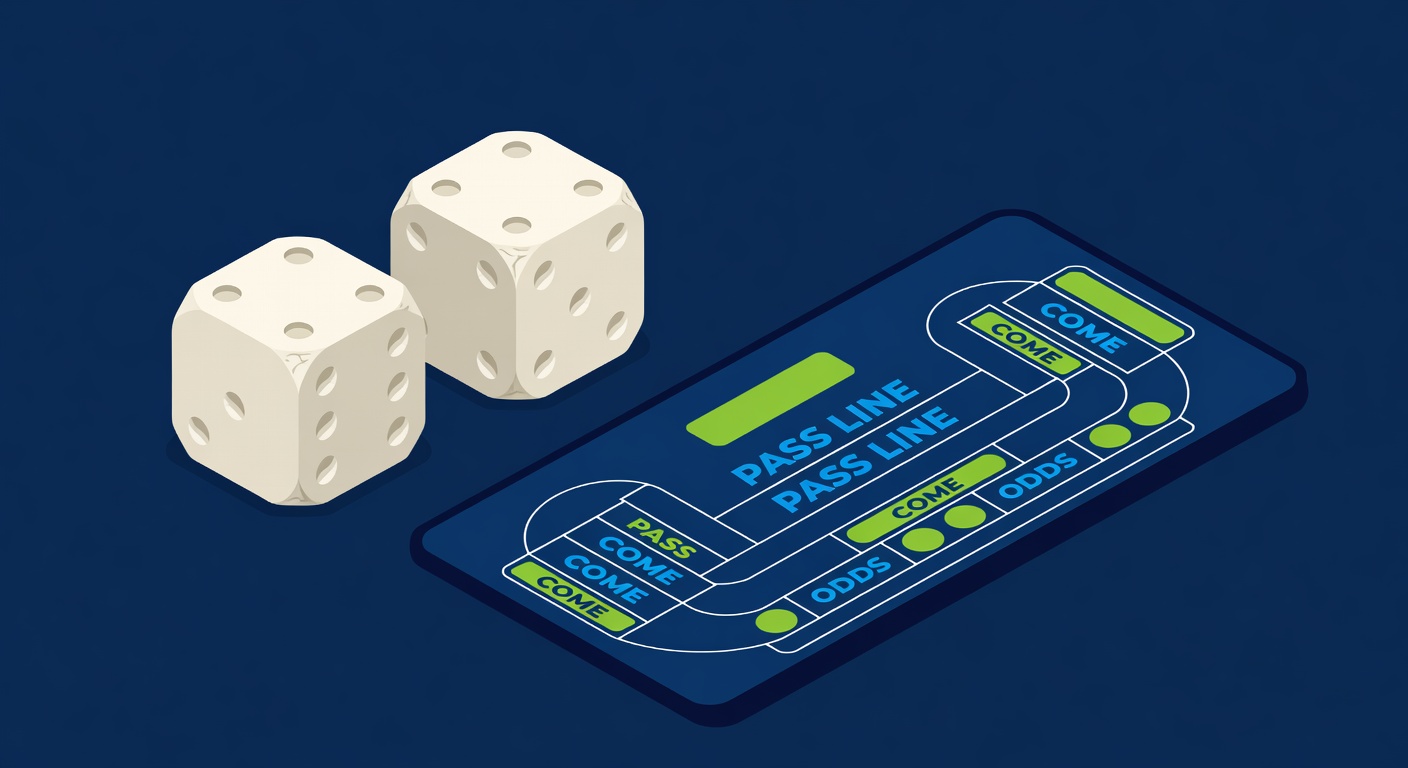
From 1945 onward, craps has remained stable in structure and odds. The house edge on a pass line bet is 1.4 percent. The house edge on place bets ranges from 1.4 to 16.7 percent depending on the number. The proposition bets in the middle are 11 to 16.7 percent. These numbers have not moved because they do not need to. The game is profitable at these edges. Increasing them would drive players to blackjack.
What changed is volume. A craps table in 1955 handled perhaps one hundred rolls per hour. Modern craps, with faster dealers and automated stickmen voices in some casinos, handles one hundred fifty rolls per hour. The revenue scaled without changing the odds.
The case tells you something specific about how games become institutions. Complexity simplifies. Street games become regulated. Fast action beats careful thought. And once a game captures enough of the market through structural advantages, those advantages become permanent because nobody wants to invest in the alternative.
Rooms for this read
Share this read