Blockers in Poker: How They Shape Bluffing Decisions
A blocker is a card you hold that makes a specific hand less likely for your opponent. Blockers change the math of bluffing.
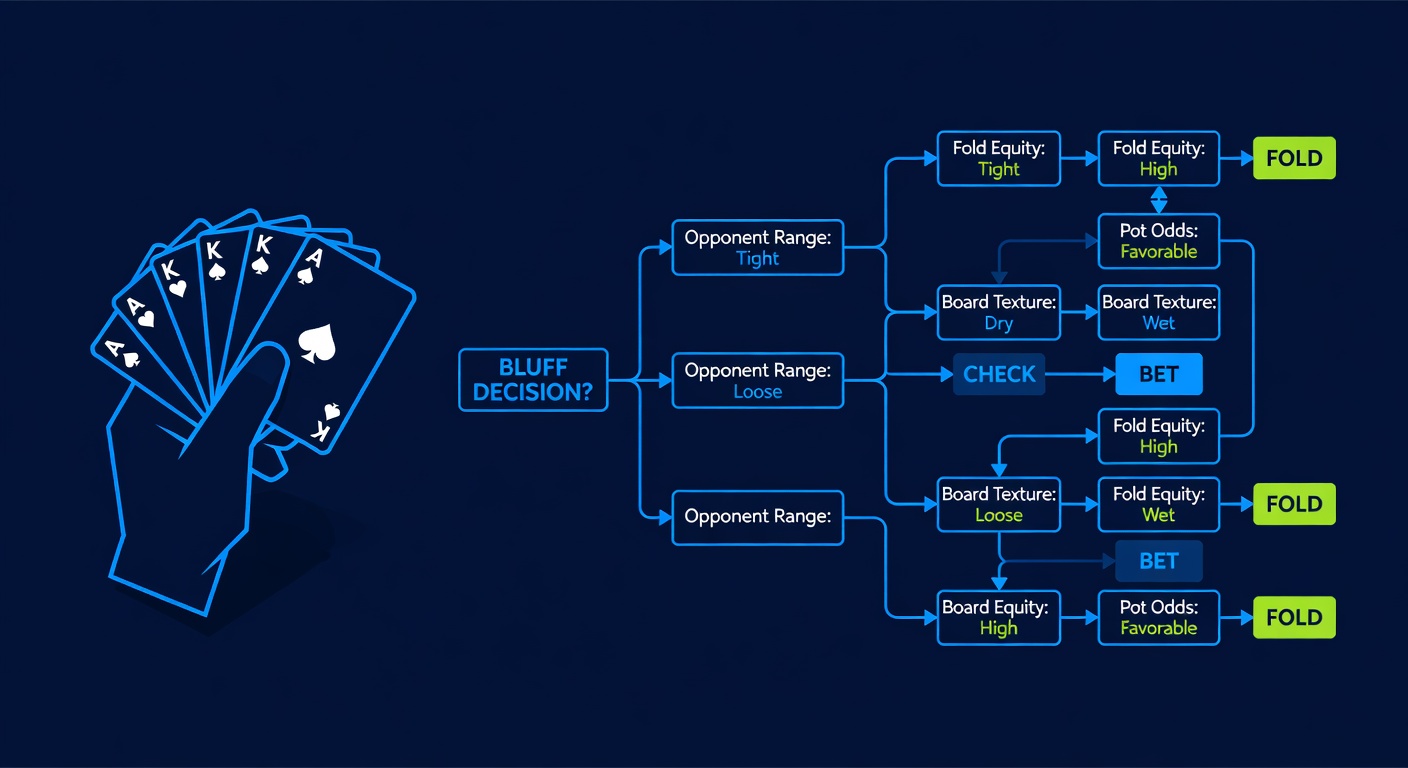
You hold A-K.
Key Points
A blocker is a card you hold that removes outs from your opponent's hand. If you hold the king of hearts, your opponent cannot have a king-high hand. If you hold the ace, your opponent cannot have a pocket ace.
Blockers change the probability that your opponent has a strong hand. If you hold cards that block strong hands, the opponent is more likely to have a weak hand. If the opponent has a weak hand, your bluff has a higher chance of winning.
Example. You bluff. Your opponent folds 50 percent of the time and calls 50 percent of the time. But if you are holding blockers to their strong hands, they fold 55 percent of the time and call 45 percent of the time. This shift makes the bluff profitable when it might not have been otherwise.
Blockers are invisible to the casual player. Most players do not think about them. The players who do understand blockers have an edge. They make bluffs that are slightly more profitable. Over thousands of hands, this edge compounds.
You are playing a small hand that will rarely have value. But you hold the blockers to their strong hands. The bluff is more profitable because they are less likely to have hands strong enough to call. This is poker thinking at the next level.
For the player, understanding this dynamic is essential. Most casual participants overlook the mechanics entirely. This oversight costs them money consistently. The margin between informed play and uninformed play grows with each decision made. Over time, these margins become substantial. The cost of ignorance compounds.
The Takeaway
For the serious player, this understanding is foundational. The difference between casual and professional approach is measurable. Over a season, the marginal gains accumulate. These gains are not luck. They are the result of systematic thinking about the mechanics that most players ignore.
The player who understands these principles will lose less money in the long run. The player who masters these principles might actually edge into profitability. Neither outcome is guaranteed. The advantage is real nonetheless.
The numbers matter. The discipline matters. The emotional control matters. Without all three, the best information is worthless. With all three, even modest insights compound into significant advantages.
Rooms for this read
Share this read