The Tran Organization: The Biggest Casino Cheating Ring in US History
It happened fast. Too fast. The eye-in-the-sky caught it on the second hand. A dealer in marked cards passing through a controlled cut to a player with dead eyes and steady hands.
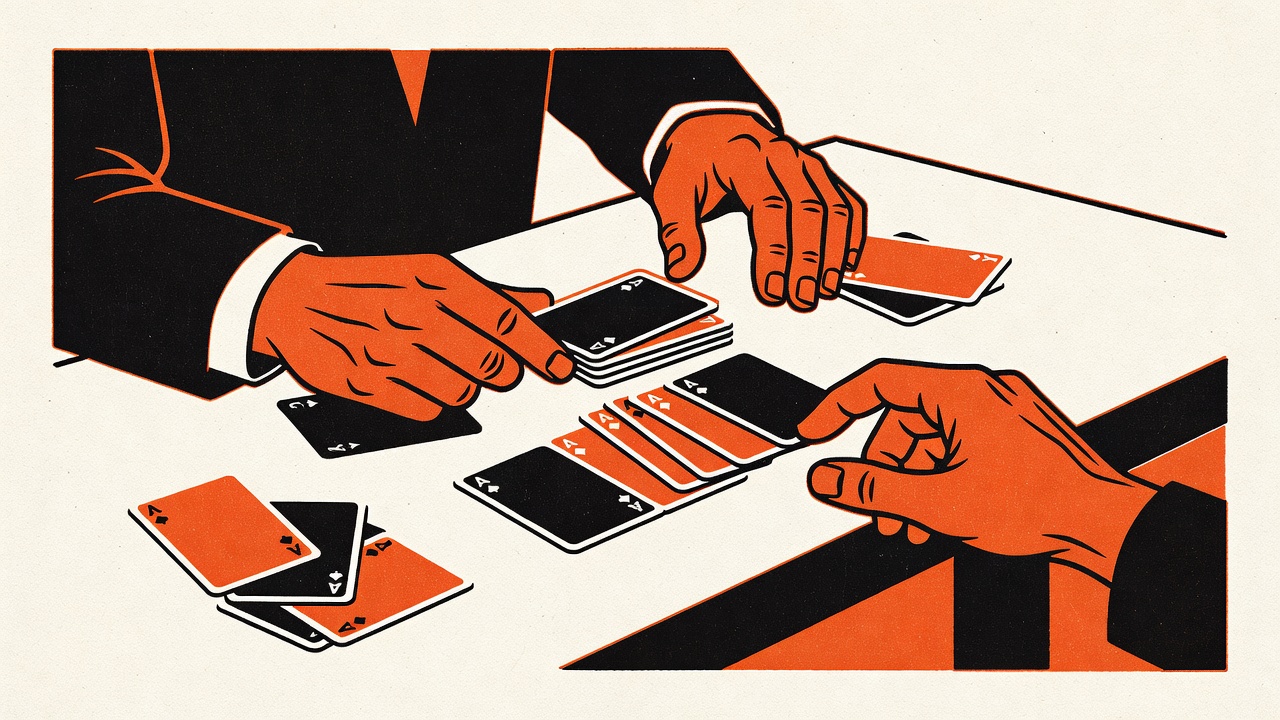
The Tran Organization operated for three years in Nevada casinos before anyone understood the full scope of what was happening. It was 1995 when the story started. A player showed up at Aladdin Casino with a bankroll and a method. He won consistently. Not dramatically. Not suspiciously. Just consistently, in ways that followed the line of probable variance. He played baccarat, a game where the house edge is already thin, and he won at a rate that suggested he had found some exploit, some edge, some way to turn the odds slightly in his favour.
Baccarat is a simple game. You bet on banker or player. Cards are dealt. The higher total wins. There is no decision-making, no strategy, no room for skill. You either win or lose on cards you did not choose. Yet this player was winning. The supervisors watched the tapes. Nothing obvious. No sleight of hand. No doctored cards. Just a player sitting at a baccarat table, making bets, winning slightly more than his share of hands.
Then the pattern expanded. Multiple players. Multiple casinos. Caesars Palace, the Golden Nugget, Bellagio. All playing baccarat. All winning consistently. All using methods so subtle that the floor staff could not identify what was happening. The pit boss called surveillance. Surveillance called corporate. Corporate called the Nevada Gaming Commission.
The Method
What the surveillance team eventually discovered was a marked-card scheme so sophisticated that it made the old Vegas cheating operations look like children playing with a deck in a basement. The Tran Organisation used a chemical process to mark cards in ways that were invisible to the naked eye but visible to someone wearing special contact lenses. The marks were applied at the print level, during the manufacturing process itself. The casino was receiving marked decks from their suppliers without knowing it.
The operators would identify the marked cards, memorise the information encoded in the marks, and use that information to bet strategically. In a game like baccarat where you cannot change your hand, the benefit is limited. But at a game with multiple decision points (blackjack, poker), the marked cards could create an enormous edge.
What made the Tran Organisation different from prior cheating rings was the supply chain component. They were not just cheating at the table; they had access to the manufacturing and distribution of the cards themselves. A casino might catch a cheat at the table. A casino cannot catch a cheat who has modified the entire supply chain. If the cards are marked at manufacture, the casino has no way to detect the marks because the cards look identical to unmodified cards to any inspection method the casino is using.
The investigation expanded. The Gaming Commission raided card manufactures. They questioned suppliers. They examined production logs. What they discovered was that the Tran Organisation had connections to the printing facilities that produced casino cards. They could order specific decks with specific markings. They could time the introduction of marked decks to specific casinos at specific moments. They coordinated plays across multiple locations, which meant they had a distribution network, a command structure, a level of organisation that suggested something larger than a simple cheating ring.
The ring included dealers who had been compromised, slot machine technicians who had been bribed, and players who were executing the scheme at the table. The scope of the conspiracy became apparent only after months of investigation. The Gaming Commission estimated the theft at over one hundred million dollars, though that number was never fully verified because much of the activity had occurred over several years and many casino records were incomplete.
The terrifying thing about the Tran investigation was discovering that casinos had no way to detect card manipulation at the source. They could catch cheaters at the table, but they could not prevent cheating at the supply chain.
The response from the Gaming Commission was swift. New manufacturing protocols were implemented. Card inspections became more rigorous. Batch testing became mandatory, where every deck of cards was examined under ultraviolet light for chemical marks. Surveillance technology was upgraded. Pit bosses were trained in detecting more subtle forms of cheating.
But the investigation also revealed something darker: the Tran Organisation was not just a criminal enterprise, it was a business with capital and logistics and supply relationships. It was not a temporary cheating ring; it was a sustainable operation that generated profit the way a legitimate casino business does. The operators believed they could continue indefinitely as long as they did not get too greedy, as long as they stayed below the variance threshold where surveillance would automatically flag their wins as statistically impossible.
The case was prosecuted in Las Vegas in 1997. Multiple convictions. Prison sentences ranging from five to fifteen years. Asset forfeiture. The ring was broken. But the incident changed how Nevada casinos approached security. It is now impossible to operate a sustained cheating scheme in modern Vegas; the surveillance capabilities, the deck inspection protocols, the dealer training programs are simply too rigorous.
Yet the Tran case remains instructive because it shows that cheating in a casino is not primarily a problem of detection, but a problem of access. A player sitting at a table can only cheat in ways that the pit boss might see. A person with access to the supply chain can cheat in ways that no one will ever see. Modern casinos have responded by locking down the supply chain with the same vigilance they apply to the gaming floor.
The players who worked for the Tran Organisation were not criminals in the traditional sense. They were not using violence or deception in the moment. They were simply sitting at tables and playing cards they had been told were already marked. They had no reason to question the information. The real criminals were the people who had infiltrated the supply chain, who had relationships with card manufacturers, who understood that you do not cheat at the table, you cheat before the game begins.
Rooms for this read
Share this read