

The History of Slot Machines: From Liberty Bell to Megaways
The slot machine evolved from a mechanical curiosity into a global entertainment form, and its history reveals why we keep feeding them coins, even when we know the mathematics works against us.
I buy a lottery ticket once a week, never more, always on Tuesday mornings after the grocery shop. Two dollars. I do it for the same reason humans have always done it, which is not the hope of winning (I calculate the expected value; it is abysmal) but the peculiar pleasure of seventy-two hours of blameless daydreaming. I own the ticket. I might be rich on Friday. I will not be, but mathematically, I could be. That option, purchased at two dollars, is exactly what the first slot machines were invented to sell.
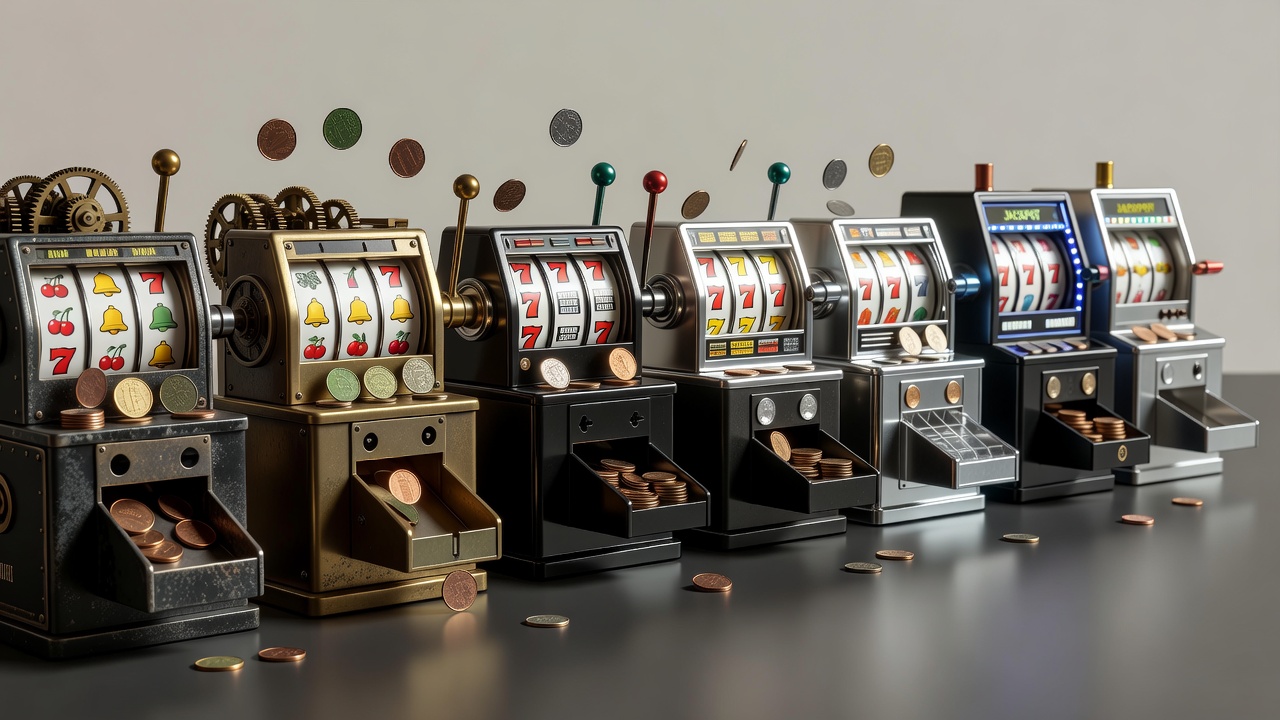
Charles Fey, a Bavarian immigrant working in San Francisco in 1894, built the Liberty Bell machine. It was not the first gaming machine. Manufacturers had been constructing coin-operated devices for decades: poker machines with mechanical card wheels, horse-racing simulators with brass gears and painted horses. But the Liberty Bell was the first to be simple, reliable, and reproducible. It had three reels, each marked with diamonds, spades, hearts, clubs, and the Liberty Bell itself. When three bells aligned, the machine dropped coins into a payout tray. The machine cost about thirty dollars to build, an enormous sum, yet Fey could not manufacture them fast enough. Tavern owners wanted them. Players lined up to feed them nickels.
Why? Because Fey had done something clever. The Liberty Bell was not a game of pure chance, like roulette. It was a game of pattern recognition and expectation. The player could see the reels spinning. The player could almost touch the matching bell on the reel that was not quite where it needed to be. That proximity, that near-miss effect, is addictive in a way pure randomness is not. The player can construct narratives of near-victory. The player can blame themselves, can strategise, can believe that timing or pressure on the lever mattered. It did not, but belief itself is a product.
The Evolution
The slot machine's history from 1900 onwards is the history of how to make that near-miss feeling more powerful while slowly reducing the player's mathematical edge. In the 1920s, mills Novelty Company introduced the first electrically powered machines. These required less physical force to operate, could accommodate more symbols, and could spin faster, creating the illusion of more choice, more opportunity, more agency. By the 1930s, the electromechanical machine dominated. By the 1950s, Bally had introduced the first fully electronic machine with electronically controlled payouts, reducing the need for human staff to manage the machines.
Each innovation made two simultaneous moves. It added complexity that made the machines feel more sophisticated, more modern, more likely to be fair. It also made it easier for the manufacturer to reduce the player's expected return by adjusting invisible mathematics rather than altering visible gear ratios. A 1920 mechanical Liberty Bell had a transparent payback, visible in the wheel mathematics. A 1965 electronic Bally machine had that payback invisible, buried in circuit boards, controllable by the manufacturer down to the tenth of a percent.
By the 1990s, manufacturers had learned to make the machines feel rewarding even while the mathematics said otherwise. The Multiline machine allowed players to bet on multiple lines, turning one spin into many simultaneous wagers. Near-miss sequences became programmed intentionally (a feature called "loss disguised as near-win"). The RTP (Return to Player) percentage became adjustable per machine. A tavern owner could order a machine set to 85 percent payback in summer and 92 percent payback in winter, mathematically invisible to the player but substantial to the bottom line.
The 2000s saw the introduction of Megaways and other dynamic-reel technology from Aristocrat and Pragmatic Play. Megaways machines use a variable number of symbols per reel, meaning each spin can create a different number of possible winning combinations: on one spin, 46,656 ways to win, on the next, 117,649. The mathematics is identical (both set to, say, an 96 percent RTP). What changed is that the variable number of ways feels more exciting, less predetermined. The player watches the reel mechanics literally change. It feels like chaos, like possibility. It is pure psychology.
That innovation is crucial to understanding why slots, not table games, dominate modern casinos. A blackjack player knows the house edge is 0.5 percent. They are choosing a game with known, stable odds. A slots player sees Megaways, sees variable reels, sees bonus rounds with expanding wilds, sees the cascade of smaller wins within a larger loss. The slots player experiences chaos. They experience agency. The mathematics of chaos is still mathematics. The return is still set by the manufacturer. But the experience is phenomenologically different.
What I have realised, over years of Tuesday lottery tickets, is that we are not buying probability when we gamble. We are buying permission to imagine.
The slot machine exists in a strange place, mathematically and philosophically. It is honest about not being profitable (the return is published, at least in regulated jurisdictions). It is dishonest about the experience it creates, which is the experience of control, when control is an illusion. The Liberty Bell made sixty percent payback feel fair because the machine was transparent and the novelty of the device was enough. Modern Megaways machines make 96 percent payback feel tense because they layer uncertainty over uncertainty.
From Liberty Bell to the present, the arc has been consistent: make the machine more complex, more novel, more psychologically arresting, while reducing the player's true mathematical edge. The first machines paid out mechanically, limited by physics. Modern machines pay out electronically, limited only by code. A Pragmatic Play machine in Malta can be changed remotely. A Liberty Bell required a screwdriver and knowledge of gear ratios.
The history of slots is the history of learning to monetise hope. Fey did it mechanically, with visible gears and transparent probability. Modern manufacturers do it digitally, with invisible mathematics and carefully engineered psychology. The Liberty Bell was a machine that sometimes paid. Modern slots are machines that are engineered to feel like they might pay, and that distinction is everything.
I have not won my two-dollar lottery ticket once in three years. I will buy another next Tuesday. I am not irrational. I am purchasing a specific experience: the experience of potential, the right to imagine, the permission to believe for three days that my life could change. That is what the Liberty Bell sold, and it is what Megaways sells today. The mathematics got worse, the experience got better, and we paid them to make both happen.
Rooms for this read
Share this read





